Commercial Water Damage in Wendell
A wet work area affects more than the floor beneath it. Commercial cleanup identifies safe access, affected stock and shared building systems before dividing removal and drying into a practical scope for the business premises.
(888) 578-4720Assess the business water damage zones- Work boundaries
- Contents coordination
- Phased material drying
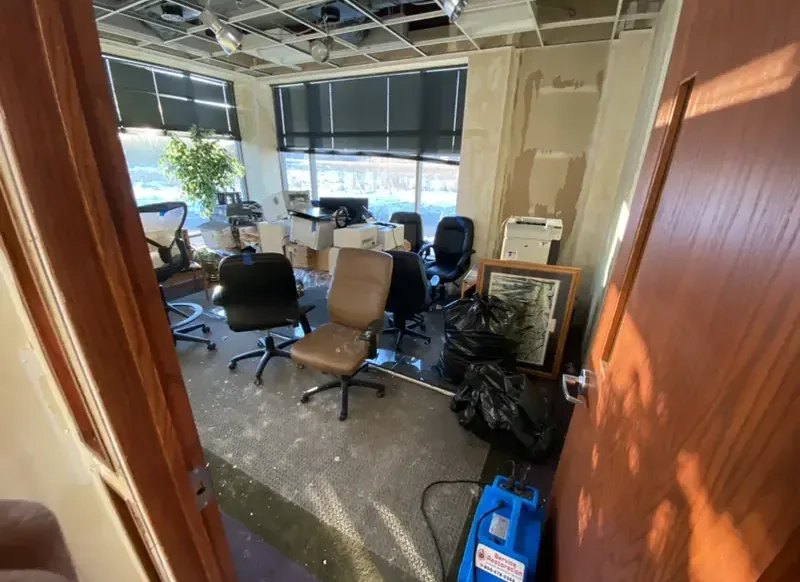
First steps for commercial water damage
- Identify the responsible building contact
A manager or property representative coordinates access, occupancy decisions and scope approval. Clear contact information helps prevent delays when water reaches rooms used by different parties.
- Separate staff from the wet zone
Keep people away from electrical exposure, unstable finishes and contaminated water. A dry route should remain available before contents are moved or cleanup equipment is brought through occupied business areas.
- Prioritize sensitive contents for assessment
Describe records, stock and equipment near the release, including anything that cannot be moved casually. Their contact condition and operational importance help organize appropriate handling without spreading water into dry storage.
- Document access and operating constraints
Locked rooms, shared corridors and scheduled building access can affect inspection. Listing those constraints early helps coordinate the source repair and material recovery around the premises while preserving safe working boundaries.
How the team handles commercial water damage
Rapid local response
The response team prioritizes source control, safe entry and the full path of wet materials. A visible puddle is only the starting point for the assessment.
IICRC S500 drying standard
The drying technician measures affected assemblies, sets a dry reference and adjusts air movement and dehumidification to the materials that remain.
Claim-ready documentation
The mitigation file records photographs, moisture readings, removal decisions and equipment use. The property owner checks policy questions with the insurer.
Local water experts
The restoration assessment separates the water source from the damage it leaves behind. Plumbing repairs, safe electrical access and material drying each receive attention.
What does commercial water damage cost in Wendell, NC?
Commercial water damage cleanup in Wendell has planning amounts from $2,000 to $20,000+. Building access, contents, water condition and the extent of connected assemblies shape the scope. Equipment repair, inventory replacement and finish reconstruction should be identified separately from water removal and material drying.
Limited work-area damage
$2,000 to $4,000
- Water within a defined business area
- Accessible surfaces and straightforward contents handling
- Focused equipment around retained finishes
Several business rooms
$4,000 to $8,000
- Moisture across adjoining occupied work spaces
- Coordinated access with building representatives
- Additional contents and drying zone planning
Extensive commercial loss
$8,000 to $20,000+
- Broader damage through connected building assemblies
- Complex handling and restricted access conditions
- Expanded treatment records for phased recovery
Compare the materials, water category and wet area with the cost planning calculator. An on-site assessment defines the work and any separate repairs.
The commercial water damage process
- 1
Map rooms and responsibilities
Room damage and authorized contacts establish the work scope. Access arrangements determine equipment routes and contents handling.
- 2
Remove water by work area
Liquid collection and material decisions follow the contact boundary. The sequence accounts for sensitive contents, adjacent occupants and the need to maintain safe passage around the active cleanup zone.
- 3
Dry retained business assemblies
Equipment is positioned for the actual partitions and floor layers. Repeat readings show which areas need continued treatment and where access changes could improve recovery of concealed wet materials.
- 4
Handoff documented zones
Completion notes identify treated rooms, remaining repair work and any ongoing restrictions. Management can use those findings alongside source repairs when deciding how the premises should return to normal activity.
Water in a business can interrupt a work route, threaten stock and enter rooms controlled by different occupants. The initial assessment therefore combines material inspection with a practical access plan. It identifies who can authorize entry, which areas remain suitable for use and how equipment or affected contents can move through the premises safely.
Match the scope to the business layout
Commercial development has expanded along Wendell Boulevard and Wendell Falls Parkway. The Wendell Commercial Historic District adds another business setting with its own interior arrangements. A storefront, office or storage area needs a plan based on its actual fixtures, partitions and operations, with the wet boundary established independently of the public entrance or lease boundary.
Water may cross beneath a partition into a stockroom that looks unaffected from the doorway. Shared walls, overhead spaces and flooring transitions deserve inspection where access is available. The building representative can help coordinate adjoining occupants so the moisture assessment follows the physical damage without overlooking a locked room or separate tenancy.
Protect operations through specific boundaries
Continued occupancy depends on the water condition, electrical safety and separation of the work. Equipment cords and hoses must not obstruct a usable exit route. Sensitive records, electronics and inventory need handling decisions suited to their material and contact, with affected items kept apart from goods that have remained dry.
- Identify the manager or building contact authorized to arrange access and approve the proposed scope.
- Describe rooms with critical equipment or stock before removal routes are established through the business.
- Coordinate any permitted occupied area with the actual safety conditions and equipment layout.
Phase the work around material needs
A phased approach can organize recovery by room or assembly where conditions allow. Each phase still requires source control, removal and appropriate drying checks. The structural drying service explains how readings support those checks, helping the business distinguish a visually tidy room from one ready for its next repair or use decision.
Owners, occupants and repair trades may need different information from the same loss. A room based record of access, affected contents and retained materials makes responsibilities easier to understand as cleanup progresses toward the remaining building repairs.
Keep the return to use tied to conditions
The final mitigation assessment should identify which zones have completed treatment and which still need repair or restricted access. Equipment removal alone does not settle every operational question. A documented handoff lets management consider the source repair, material condition and remaining trade work when organizing the business's use of the premises.
Review flood safety precautions before entering a wet building and EPA indoor air quality information when planning cleanup.
Commercial water damage in Wendell
Commercial water damage assessments in Wendell cover affected business premises in ZIP 27591. Management contacts, access restrictions and the use of adjoining rooms help establish a safe work boundary and a practical sequence for mitigation tasks.
The same service nearby: commercial water damage in Smithfield, Clayton, Selma.
Related water damage services in Wendell



Commercial Water Damage questions in Wendell
Can the business remain open during mitigation?
That depends on safe access, water condition and effective separation from the work. Management should consider electrical concerns, equipment routes and any contaminated area before deciding whether an unaffected section can remain occupied.
Who authorizes work in leased premises?
The appropriate owner or occupant representative should establish approval and access responsibilities. A clear scope identifies the affected rooms and tasks so the parties can coordinate mitigation with lease arrangements and separate building repairs.
Why inspect a neighboring room that appears dry?
Water can travel under partitions or through overhead spaces. Access to adjoining rooms helps establish the real moisture boundary, especially where separate occupants or locked storage areas could otherwise conceal part of the loss.
Can stock be moved into an unaffected office?
Its water contact and handling needs should be assessed first. A planned route and separation of affected goods protect the receiving area while allowing equipment access and preserving records of damaged inventory for later assessment.
How does phased drying work in a business?
Where safe conditions permit, treatment can be organized by room or material assembly. Each zone still needs adequate access and verified progress, with completion documented before equipment changes or repair work alter the area.
What helps management plan the next stage?
Room based notes on source control, contents, material condition and remaining repairs provide a useful handoff. Those findings help management coordinate trades and occupancy decisions without treating a cleared floor as complete building recovery.
Connect cleanup decisions with the next operational step
A documented work boundary helps building representatives and repair trades coordinate recovery. The assessment identifies what can proceed by area and what still needs treatment before the premises return to normal use.