Roof Leak Water Damage in Smithfield, NC
Rain entering a Smithfield roof can travel through sheathing, insulation and ceiling joints. The mitigation team follows that route indoors after safe source protection, then dries the materials that remain sound.
(888) 578-4720Map the rain path indoors- 24/7 rain-loss assessment
- Attic moisture inspection
- Interior drying records
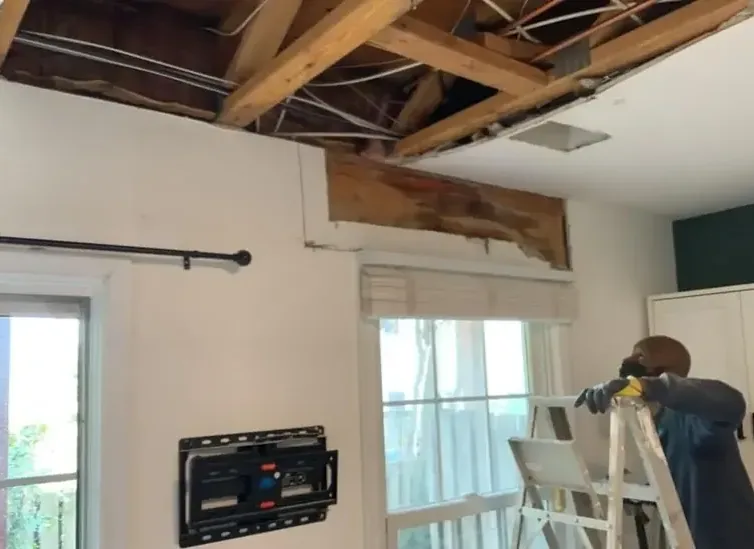
First steps for roof leak water damage
- Stay off the wet roof
Roof access during rain or wind is hazardous. A qualified roof professional evaluates source protection while occupants keep away from unstable overhead finishes indoors.
- Protect a safe indoor area
Move dry belongings only when the ceiling is stable and the route is clear. Avoid outlets, wet fixtures and rooms with sagging material.
- Describe rain timing
Note whether dripping begins during rain or continues afterward. The assessor uses that history with material readings to investigate the path through the building.
- Keep repair and damage photos
Save photographs of visible indoor damage and any professional source findings. Those records distinguish the entry repair from removal and drying inside the property.
How the team handles roof leak water damage
Rapid local response
The response team prioritizes source control, safe entry and the full path of wet materials. A visible puddle is only the starting point for the assessment.
IICRC S500 drying standard
The drying technician measures affected assemblies, sets a dry reference and adjusts air movement and dehumidification to the materials that remain.
Claim-ready documentation
The mitigation file records photographs, moisture readings, removal decisions and equipment use. The property owner checks policy questions with the insurer.
Local water experts
The restoration assessment separates the water source from the damage it leaves behind. Plumbing repairs, safe electrical access and material drying each receive attention.
What does roof leak water damage cost in Smithfield, NC?
Interior mitigation after a roof leak often ranges from $1,000 to $4,000. Widespread attic insulation and ceiling damage may reach $4,000 to $8,000 or more. Roof protection, roof repair and replacement finishes are separate from the indoor dry-out.
Single indoor leak area
$1,000 to $2,000
- Source-path moisture survey
- Limited interior extraction
- Targeted cavity drying
Attic and ceiling damage
$2,000 to $4,000
- Wet insulation evaluation
- Selective ceiling access
- Framing and room moisture records
Several connected spaces
$4,000 to $8,000+
- Expanded removal and containment
- Multiple drying zones
- Detailed repair coordination records
Compare the materials, water category and wet area with the cost planning calculator. An on-site assessment defines the work and any separate repairs.
The roof leak water damage process
- 1
Coordinate source protection
The assessment establishes whether rain is still entering and what safe exterior work is needed before indoor drying can maintain a controlled environment.
- 2
Inspect the overhead route
The technician checks accessible sheathing, framing, insulation and ceiling boundaries, then follows moisture down walls and into the room below.
- 3
Remove damaged absorbent layers
The crew evaluates saturated insulation and weakened finishes, retaining sound materials only where contamination and access permit an effective drying approach.
- 4
Track the retained structure
Repeated readings document drying progress and identify any persistent wet pocket before the repair contractor closes the attic or ceiling access.
A roof leak can wet an attic before a mark appears indoors. Rain may follow a rafter or penetration and emerge away from the exterior defect. At a home in West Smithfield, the restoration technician checks that complete route instead of limiting the survey to the first ceiling drip.
Exterior protection and interior mitigation work together
A roof professional evaluates the entry point and safe weather protection. The restoration scope removes released water and assesses wet building materials below. Continuing rain can defeat an otherwise effective drying setup, so the source status remains part of each progress check.
- Inspect the accessible roof-deck area and framing near the suspected path, with safe support and electrical precautions.
- Check insulation beneath the entry point for water retention and loss of useful condition.
- Follow staining into ceiling corners, wall tops and concealed spaces where framing redirects the flow.
- Record exterior repair information separately from the indoor removal and drying scope.
Do not climb into an unsafe wet attic
Occupants should avoid roof access during bad weather and stay away from wet attic wiring or unsupported ceiling surfaces. The response team assesses a safe route before inspection. A leaking fixture or sagging ceiling below also needs clearance until the affected assembly is stable.
A flashlight view from a safe access point can show staining; material readings check moisture inside the assembly. The technician takes appropriate material readings and considers how the roof, insulation and ceiling layers affect moisture release.
Humidity control supports drying below the roof
Smithfield has hot summers and cool winters. After rain entry, indoor temperature and humidity influence the drying environment. Air movers and dehumidifiers support evaporation from accessible sound materials; saturated insulation or damaged ceiling panels may need removal to expose the retained structure.
Properties around Market Street can contain attached rooms with continuous ceiling spaces. The moisture map checks beyond the room where water first appears. Along Brightleaf Boulevard, the same principle applies to a business ceiling that carries the water path above partitions before it reaches the floor.
Use the dry-out record before closing access
The crew records moisture progress in the roof deck, framing and indoor finishes that remain. The repair contractor can then identify which openings need closure and which materials require replacement. An attractive ceiling patch should not conceal a wet cavity or unresolved entry point.
24/7 damage support addresses an active indoor loss while the exterior repair plan accounts for weather and safe access. The owner keeps both scopes and the initial photographs together for a clear explanation of the rain damage.
Review flood safety precautions before entering a wet building and EPA indoor air quality information when planning cleanup.
Roof Leak Water Damage in Smithfield
Restoration support covers ZIP 27577, West Smithfield and the historic downtown district, including properties around Market Street and Brightleaf Boulevard. The assessment follows the wet rooms, floor layers and safe entry route at each home or business.
Related water damage services



Roof Leak Water Damage questions in Smithfield
Does the restoration crew replace the roof?
The mitigation scope addresses water damage indoors. Exterior protection and roof repair need a separate assessment and agreement with the appropriate professional. Both scopes should coordinate so more rain does not enter.
Can rain travel away from the roof defect?
Yes. Framing and roof penetrations can redirect water before it reaches a ceiling. The technician checks the accessible route instead of assuming the indoor stain sits directly below the opening.
Should wet attic insulation stay in place?
The decision depends on saturation, contamination, material condition and drying access. Retained wet insulation can slow the structure's drying, so the crew documents whether removal is necessary.
Why does dripping continue after rain stops?
Water held in insulation or cavities can drain slowly. Continued dripping warrants a check of retained moisture and source status, even when outdoor rain has ended.
Is opening windows enough to dry the room?
Outdoor humidity may add moisture rather than remove it. The drying technician controls the indoor environment with appropriate equipment and verifies material response through repeat readings.
When can the ceiling be closed?
The source must be addressed and retained materials must meet the selected drying criteria. The completion record identifies those readings and any remaining repair or testing requirements before closure.
Dry the structure below the repaired roof
The mitigation team checks the attic-to-room water path, removes damaged layers and records drying progress. 24/7 support addresses active indoor damage.