Sewage Backup Cleanup in Wendell
Wastewater emerging indoors calls for a firm boundary around the contacted rooms. Cleanup separates removal, contents assessment and surface treatment from the drain investigation that establishes why the backup occurred.
(888) 578-4720Arrange a wastewater contact assessment- Restricted access
- Controlled removal
- Source investigation

First steps for sewage backup cleanup
- Restrict access immediately
People and pets should stay outside contacted rooms. Crossing wastewater to retrieve belongings or operate equipment can carry contamination into dry spaces.
- Limit further discharge
Continued drain use may add to the release. The source needs assessment by the appropriate professional, with the backup opening and any ongoing flow described from a safe location.
- Keep contents in the contact zone
Moving boxes or furniture into clean rooms can extend the damage boundary. A controlled assessment should decide which belongings need treatment, separate handling or disposal before they leave the affected area.
- Record the observed spread safely
Photographs from a dry approach can show drain locations, water marks and affected finishes. The discovery timeline also helps connect the source investigation with the indoor mitigation record.
How the team handles sewage backup cleanup
Rapid local response
The response team prioritizes source control, safe entry and the full path of wet materials. A visible puddle is only the starting point for the assessment.
IICRC S500 drying standard
The drying technician measures affected assemblies, sets a dry reference and adjusts air movement and dehumidification to the materials that remain.
Claim-ready documentation
The mitigation file records photographs, moisture readings, removal decisions and equipment use. The property owner checks policy questions with the insurer.
Local water experts
The restoration assessment separates the water source from the damage it leaves behind. Plumbing repairs, safe electrical access and material drying each receive attention.
What does sewage backup cleanup cost in Wendell, NC?
Sewage backup cleanup in Wendell has planning ranges from $1,500 to $12,000+. Contacted porous materials, contents and controlled access affect the amount. Drain diagnosis and repair are separate from removal, cleaning and drying of the interior surfaces and assemblies reached by wastewater.
Limited contaminated room
$1,500 to $3,000
- Defined wastewater contact within one room
- Controlled liquid and residue collection
- Assessment of affected porous edges
Connected contaminated areas
$3,000 to $5,000
- Contact through adjoining interior spaces
- Additional contents separation and removal
- Expanded cleaning of retained surfaces
Extensive sewage contact
$5,000 to $12,000+
- Widespread absorption in building finishes
- Complex access and handling routes
- Broader treatment before structural drying
Compare the materials, water category and wet area with the cost planning calculator. An on-site assessment defines the work and any separate repairs.
The sewage backup cleanup process
- 1
Set containment and access
The work area is defined from the wastewater contact pattern. Entry restrictions and handling routes protect unaffected spaces while source control and removal needs are established.
- 2
Collect liquid and affected material
Removal accounts for gross residue and porous finishes that cannot remain. Contents are assessed separately so treatment decisions reflect their actual contact and material condition.
- 3
Treat accessible retained surfaces
Cleaning prepares durable surfaces and exposed structure for the next stage. Joints and cavities are inspected where residue or absorbed wastewater may remain out of direct view.
- 4
Dry and document the assembly
Moisture readings track retained materials after treatment. The final record distinguishes source repair, removal, cleaning and drying, with any remaining reconstruction needs explained before the room is reinstated.
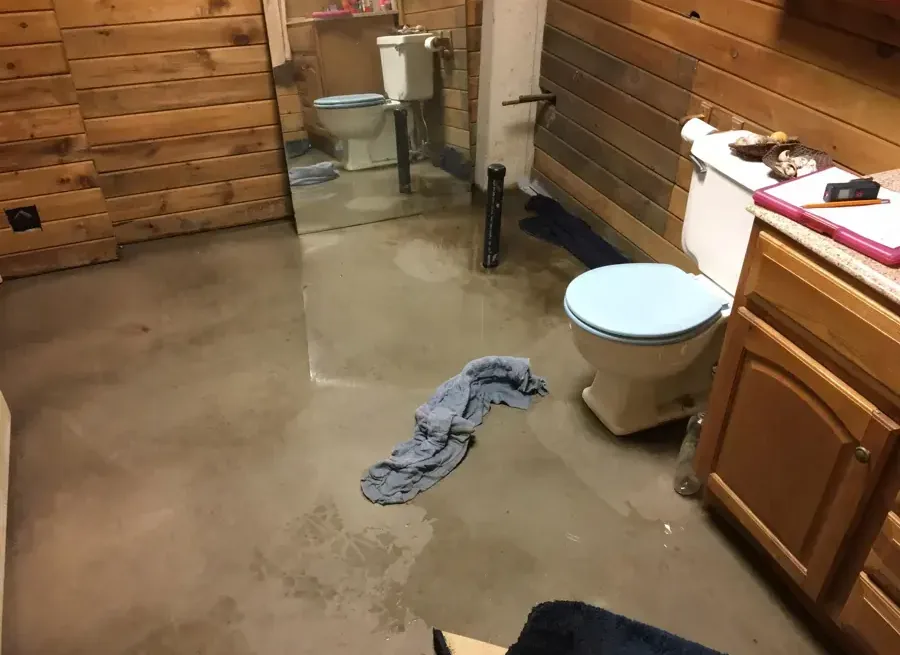
A backup can soil surfaces beyond the pool directly around a drain. Footwear, stored items and furniture can spread contact into the next room if moved casually. The first mitigation decision is a controlled work boundary, followed by removal and a material assessment that accounts for wastewater contamination as well as moisture.
Define the affected interior independently of the source
Commercial activity along Wendell Boulevard and Wendell Falls Parkway provides different building layouts from residential properties around Hollybrook Park. In every case, the indoor scope follows the actual wastewater contact. A drain investigation establishes the backup origin, while cleanup identifies the floors, wall bases and contents that require controlled handling inside the premises.
That division matters because clearing a blockage does not clean the room. The source professional may restore drainage while porous finishes still hold wastewater. A written scope should make both responsibilities clear and identify whether discharge has stopped before removal or further material treatment proceeds within the affected area.
Make material decisions before circulating air
Absorbent finishes and stored goods need evaluation for removal when sewage has entered them. Durable accessible surfaces may be treated after gross material and liquid have been collected. Ordinary fans should not be used across a contaminated room before the work method is established, because uncontrolled airflow can distribute residue beyond the cleanup boundary.
- Keep occupants and pets outside rooms where wastewater has contacted flooring or stored contents.
- Describe the drain opening and any continued discharge without touching the liquid or debris.
- Preserve a dry handling route for equipment and materials leaving the affected interior.
Inspect junctions that retain wastewater
Floor joints, cabinet bases and lower wall cavities can conceal contact after the surface pool is gone. Selective access helps determine whether materials can remain or should be removed. The toilet overflow page covers a fixture centered release, while a broader backup assessment may need to follow wastewater through several connected interior spaces.
A room can retain contaminated materials even when the strongest odor has faded. The recovery decision follows the recorded contact area, material condition and completed cleaning work rather than relying on smell as the only measure of progress.
Verify the retained assembly before rebuilding
Drying follows the appropriate removal and treatment steps. Readings establish where retained structure still holds moisture, and the final notes identify the materials left ready for repair. Keeping source findings, cleaning records and drying information together gives the owner a useful account of the complete interior recovery process after the backup.
Review flood safety precautions before entering a wet building and EPA indoor air quality information when planning cleanup.
Sewage backup cleanup in Wendell
Sewage cleanup in Wendell addresses wastewater affected interiors in ZIP 27591. The drain opening, ongoing discharge and rooms contacted determine access restrictions and handling routes while the appropriate source professional investigates the origin of the backup.
The same service nearby: sewage backup cleanup in Smithfield, Clayton, Selma.
Related water damage services in Wendell


Sewage Backup Cleanup questions in Wendell
Does clearing the drain complete the cleanup?
Drain repair addresses the source. Wastewater already inside the building still requires removal, material assessment and suitable cleaning before the retained structure can be dried and the affected rooms repaired.
Can sewage touched carpet remain for drying?
Absorbent materials contacted by sewage need careful removal and retention decisions. The assessment considers contamination within the carpet and supporting layers, rather than treating a dry surface as evidence of completed cleanup.
Why avoid household fans in the room?
Uncontrolled airflow over contaminated surfaces can distribute residue. The work boundary, removal and cleaning method should be established before drying equipment circulates air through the affected interior or its adjoining spaces.
Is the backup necessarily a public sewer problem?
The source investigation must establish where and why the drainage failed. Indoor mitigation follows wastewater contact regardless of that origin, with responsibility questions addressed through the appropriate plumbing or utility process.
What happens to contaminated stored items?
Contents are evaluated by material and contact. Some require removal, while suitable items may be treated through a controlled process. Keeping them separate protects dry belongings and occupied spaces during handling.
How is readiness for repair documented?
Notes identify contacted areas, materials removed and treatment completed. Moisture readings then describe the retained structure, making the transition to rebuilding clearer than relying only on the room's appearance or odor.
Recover the interior after a drain backup
A documented sequence connects removal, surface treatment and drying with the source findings. That record helps organize the remaining repairs and keeps contaminated material handling separate from unaffected occupied space.