Ceiling Leak Water Damage in Smithfield, NC
Smithfield ceiling leak cleanup starts above the stain. The restoration technician checks sagging drywall, wet insulation and electrical hazards, then follows moisture down partitions and into the floor beneath the leak.
(888) 578-4720Assess the overhead water path- 24/7 overhead loss support
- Wet insulation checks
- Controlled cavity drying

First steps for ceiling leak water damage
- Keep people away from the sag
Clear the space below swollen drywall and loose fixtures. The overhead assembly needs assessment before occupants move furnishings or collect water directly beneath it.
- Stop a reachable source
If an interior supply feeds the leak, use a safely accessible shutoff. Avoid wet switches, appliances and electrical panels while arranging source repair.
- Describe what sits above
Mention an upper bathroom, laundry, air handler or plumbing access if known. The technician uses the layout to plan a safe source investigation.
- Photograph from outside the hazard
Record the stain and wet floor from a dry doorway. Images before removal help explain the original condition without placing anyone beneath unstable material.
How the team handles ceiling leak water damage
Rapid local response
The response team prioritizes source control, safe entry and the full path of wet materials. A visible puddle is only the starting point for the assessment.
IICRC S500 drying standard
The drying technician measures affected assemblies, sets a dry reference and adjusts air movement and dehumidification to the materials that remain.
Claim-ready documentation
The mitigation file records photographs, moisture readings, removal decisions and equipment use. The property owner checks policy questions with the insurer.
Local water experts
The restoration assessment separates the water source from the damage it leaves behind. Plumbing repairs, safe electrical access and material drying each receive attention.
What does ceiling leak water damage cost in Smithfield, NC?
Ceiling leak mitigation commonly costs $800 to $3,000 for a limited overhead area. Wet insulation, connected walls or several rooms can raise the drying and removal scope to $3,000 to $6,500 or more, excluding source and finish repairs.
Limited ceiling area
$800 to $1,800
- Moisture tracing around the stain
- Targeted drying access
- Material checks before finishing
Ceiling and partition spread
$1,800 to $3,000
- Wet insulation evaluation
- Wall and floor moisture mapping
- Controlled removal where needed
Multiple overhead assemblies
$3,000 to $6,500+
- Larger protected work zone
- Several wet cavities and rooms
- Expanded equipment and records
Compare the materials, water category and wet area with the cost planning calculator. An on-site assessment defines the work and any separate repairs.
The ceiling leak water damage process
- 1
Assess overhead safety
The crew evaluates sagging finishes, fixtures and electrical concerns, then establishes the safe opening and removal approach for the affected ceiling assembly.
- 2
Trace the moisture route
Measurements follow water above the stain and down nearby partitions, including flooring and built-in storage beneath the initial drip location.
- 3
Open and dry the cavity
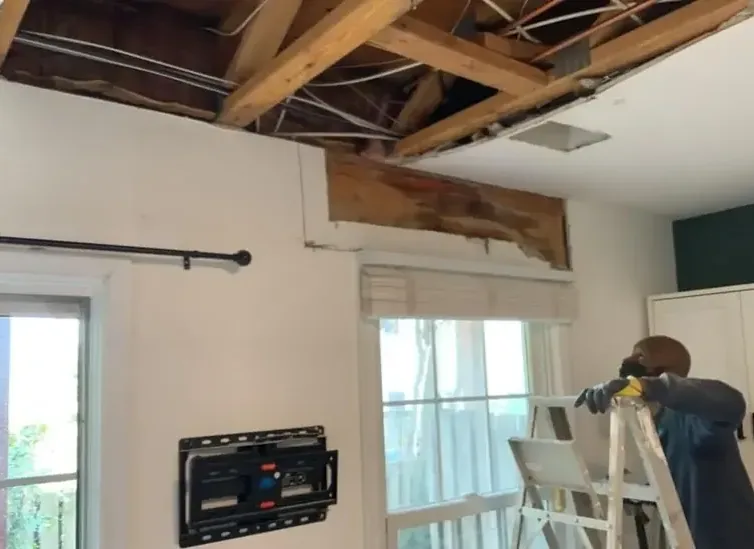
Selective removal releases trapped moisture or damaged insulation while air movement and dehumidification target the sound framing and retained finishes.
- 4
Confirm the finish handoff
The technician logs material readings and source status so ceiling repairs proceed with a clear account of drying progress and remaining work.
A ceiling mark is the visible end of a longer water path. The source may sit above the stain or beside it, with framing carrying water toward a joint or fixture. The assessment of a Market Street property begins by identifying that source and checking whether the ceiling remains safe to approach.
Protect the area below a wet ceiling
Water adds weight to drywall and insulation. A sag, bulge or loose light fixture deserves immediate clearance below it. The response team plans access from a safe position and coordinates electrical precautions before opening the assembly. Moving a chair beneath a drip does not remove the overhead hazard.
Occupants should not puncture a swollen ceiling or operate a wet light switch. A controlled opening requires an assessment of electrical wiring, falling material and the water held above. The crew establishes that work area before removing damaged drywall or placing equipment under the leak.
Readings show what the paint conceals
The technician inspects beyond the outline of the stain. Moisture can remain in framing, insulation and the upper part of a partition after drips stop. Homes in West Smithfield need an assembly-specific plan, including checks around ceiling penetrations and adjoining walls. Thermal patterns can direct the survey, while material measurements establish the wet boundary.
- Inspect insulation for retained water and determine whether safe drying requires removal.
- Check the top and base of nearby walls where water can travel inside the partition.
- Measure flooring beneath the drip and at furniture or cabinet edges that hide pooled water.
- Document the original stain, source access and each material removed for the drying plan.
Dry the cavity before restoring the finish
The drying team controls room humidity and moves air through accessible wet assemblies. A closed cavity may require selective access rather than more fans on the painted surface. Conditions at a building along Brightleaf Boulevard depend on its actual ceiling layers and the amount of water released, not the street name.
Primer and new paint belong after the source is repaired and material readings meet the chosen goal. Covering a stain too soon can hide ongoing moisture. 24/7 damage assessment focuses first on safe entry and active leakage, then on preserving sound materials where the readings support that choice.
Identify the separate repair responsibilities
Plumbing or equipment repair addresses the source; mitigation handles released water and wet building materials. The final scope should also identify drywall replacement, finish work and any electrical assessment still needed. Photographs and repeat readings make that handoff easier to understand.
Review flood safety precautions before entering a wet building and EPA indoor air quality information when planning cleanup.
Ceiling Leak Water Damage in Smithfield
Restoration support covers ZIP 27577, West Smithfield and the historic downtown district, including properties around Market Street and Brightleaf Boulevard. The assessment follows the wet rooms, floor layers and safe entry route at each home or business.
Related water damage services


Ceiling Leak Water Damage questions in Smithfield
Should a bulging ceiling be punctured?
Occupants should keep clear and arrange a safety assessment. Wiring, falling drywall and pooled water can make an improvised opening dangerous. The crew controls access before releasing water or removing material.
Does the stain mark the source?
Not always. Water can travel along framing before reaching a seam or fixture. The technician investigates above and around the stain rather than treating its center as the failure point.
Can the ceiling remain in place?
Sound material may be salvageable when contamination and cavity conditions permit drying. Sagging drywall, damaged insulation or inaccessible wet pockets can require selective removal. Measurements and condition guide the decision.
Why inspect the floor too?
Water leaving the ceiling can enter floor seams, carpet and cabinet bases. A complete assessment follows the vertical path so the drying plan includes both overhead and lower materials.
When can repainting begin?
Source repair and acceptable material readings come first. Painting over a wet surface can conceal continued damage. The restoration record helps the repair contractor understand what has dried and what remains open.
Does this cover a roof leak?
Rain entry needs exterior source protection as well as interior assessment. The roof leak service explains that sequence. This ceiling assessment also applies to plumbing or equipment water originating inside the building.
Trace the leak above the visible mark
The restoration team checks overhead safety and measures the full water path before drying retained materials. 24/7 help begins with the active hazard.