Commercial Water Damage in Smithfield, NC
Commercial water damage in Smithfield needs a room-by-room scope and a workable access plan. The mitigation team separates affected spaces, removes water and tracks drying while managers evaluate safe business use.
(888) 578-4720Assess the wet business areas- Phased work-area planning
- Equipment and moisture logs
- 24/7 loss assessment
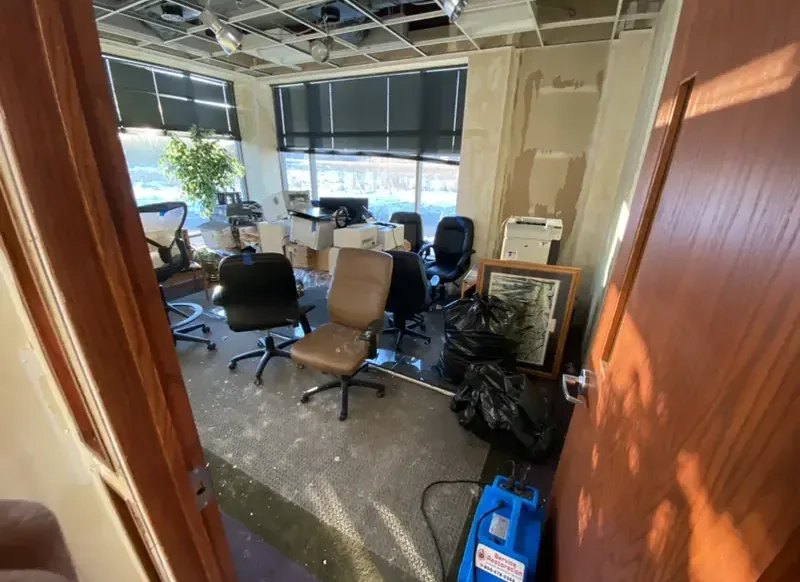
First steps for commercial water damage
- Restrict the affected work area
Keep employees and visitors outside wet electrical or contaminated spaces. Mark a safe circulation route while the response team evaluates the source and building conditions.
- Identify the property decision-maker
Provide the manager or owner contact for access, utilities and work authorization. Shared spaces may need coordination before source repair or material inspection can proceed.
- Record stock and equipment condition
Photograph affected items from a safe position and note essential operations. Avoid moving energized devices or contaminated contents through clean work areas without a handling plan.
- Describe operational constraints
Explain delivery routes, occupied rooms and equipment that must remain accessible. The mitigation scope can then address safe phasing with explicit restrictions for the affected work area.
How the team handles commercial water damage
Rapid local response
The response team prioritizes source control, safe entry and the full path of wet materials. A visible puddle is only the starting point for the assessment.
IICRC S500 drying standard
The drying technician measures affected assemblies, sets a dry reference and adjusts air movement and dehumidification to the materials that remain.
Claim-ready documentation
The mitigation file records photographs, moisture readings, removal decisions and equipment use. The property owner checks policy questions with the insurer.
Local water experts
The restoration assessment separates the water source from the damage it leaves behind. Plumbing repairs, safe electrical access and material drying each receive attention.
What does commercial water damage cost in Smithfield, NC?
Commercial water mitigation can range from $2,000 to $8,000 for a limited business loss. Large floor areas, contaminated water, sensitive contents or difficult access may raise the scope to $8,000 to $20,000 or more. The property assessment sets the work.
Limited work-area damage
$2,000 to $4,000
- Wet-area and access mapping
- Extraction with targeted drying
- Material and equipment records
Several business rooms
$4,000 to $8,000
- Phased work zones and contents access
- Multiple floor or ceiling assemblies
- Daily progress and restriction review
Extensive commercial loss
$8,000 to $20,000+
- Larger removal and drying footprint
- More complex access coordination
- Detailed condition and repair handoff
Compare the materials, water category and wet area with the cost planning calculator. An on-site assessment defines the work and any separate repairs.
The commercial water damage process
- 1
Survey the business footprint
The team maps source conditions, wet materials and essential circulation, documenting adjacent rooms and shared spaces that may need access during the assessment.
- 2
Plan controlled work zones
Managers and mitigation personnel identify restrictions, contents handling and equipment routes so extraction and removal proceed within a practical, safe property access plan.
- 3
Extract and dry by assembly
The crew removes liquid and unsalvageable materials, then sets airflow and dehumidification for retained floors, partitions and ceiling components in each affected zone.
- 4
Release areas from records
Repeat readings support the completion assessment while remaining repair and equipment needs are documented for the manager's reopening and reconstruction decisions.
Water in a business affects more than the floor. Inventory, records, electrical equipment and customer routes can all constrain the cleanup. The assessment of a Market Street property identifies the wet footprint and the manager's access needs before deciding whether separate areas can remain usable.
Define the work boundary before moving contents
The response team identifies the source, contamination and materials affected. Managers can identify essential equipment and sensitive stock, but safe handling depends on the condition of the room. Wet electrical devices and contaminated contents need an appropriate assessment before anyone moves them through unaffected space.
- Mark affected rooms, adjoining storage and circulation routes that the cleanup equipment must cross.
- Record wet inventory and fixtures before movement changes their original position or condition.
- Identify building-management contacts for source repair, utilities and access to shared spaces.
- Separate mitigation equipment records from any proposal for replacement fixtures or reconstruction.
Phase the dry-out around safe building use
A large open room may permit a divided work area, while a narrow corridor may prevent safe access during extraction. The plan addresses hoses, equipment power, noise and protected circulation. Businesses along Brightleaf Boulevard need that property-specific review rather than a promise that every operation can continue unchanged.
Keep staff and visitors away from water touching energized equipment, contaminated surfaces or unstable ceilings. The response team evaluates safe circulation and restrictions before setting up equipment. A manager should not reopen an affected area merely because the visible puddle has disappeared or a customer entrance remains accessible.
Follow moisture across partitions and floor finishes
Commercial rooms can contain carpet tile, resilient flooring, cabinetry and suspended ceiling components in the same loss. Water can travel beneath partitions or through ceiling voids. At properties near the Ava Gardner Museum, as elsewhere downtown, the mitigation survey follows those connections and checks adjacent occupancies when access and the wet boundary require it.
The drying technician records which assemblies remain and which damaged layers need removal. Equipment placement and capacity follow those materials, with daily measurements identifying slow locations. A phased scope should explain when the crew can release one area and what still prevents use of another.
Make the final records useful to the manager
The completion file includes source information, photographs, material-removal decisions and drying logs. It identifies remaining electrical, finish or equipment work so the manager can coordinate reopening with the appropriate professionals. 24/7 commercial loss assessment begins with active water and access, while the following work proceeds from a documented room-by-room plan.
Review flood safety precautions before entering a wet building and EPA indoor air quality information when planning cleanup.
Commercial Water Damage in Smithfield
Restoration support covers ZIP 27577, West Smithfield and the historic downtown district, including properties around Market Street and Brightleaf Boulevard. The assessment follows the wet rooms, floor layers and safe entry route at each home or business.
Related water damage services



Commercial Water Damage questions in Smithfield
Can the business remain open during cleanup?
The answer depends on contamination, utilities, safe circulation and the affected footprint. The manager and assessment team evaluate separate usable areas. Continued operation should not require staff or customers to cross an unsafe work zone.
Does the scope include inventory replacement?
The mitigation scope should identify contents handling separately from replacement decisions. The owner documents affected stock and checks the applicable policy and agreements. Building drying does not automatically include replacement of business contents.
Why inspect beyond the first wet office?
Water can move under partitions, across floor transitions and through ceiling voids. A broader moisture map establishes the actual boundary rather than assuming a doorway contains the loss.
How does equipment affect daily access?
Hoses, cords, noise and equipment placement can restrict normal circulation. A phased plan identifies safe routes and required access so the work arrangement is understandable to staff and building management.
Who coordinates a shared-building source?
The property manager or responsible owner arranges access and appropriate source professionals. The restoration crew documents observed water damage and coordinates its scope with those repairs rather than assigning responsibility without investigation.
What supports reopening an affected area?
Source status, sanitation, electrical safety and material condition all matter. The mitigation completion record explains drying results and remaining repairs so the manager can make a coordinated use decision.
Plan the cleanup around the building condition
The mitigation team documents work zones, retained material drying and remaining repair needs so managers can coordinate the next phase with clear records.