Commercial Water Damage in Clayton
A wet workplace creates operational decisions as well as material damage. The assessment should identify safe access, exposed equipment and affected building layers before managers decide which activities can continue during cleanup and repairs.
(888) 578-4720Assess the affected business areas- Access and occupancy planning
- Contents damage record
- Phased room recovery
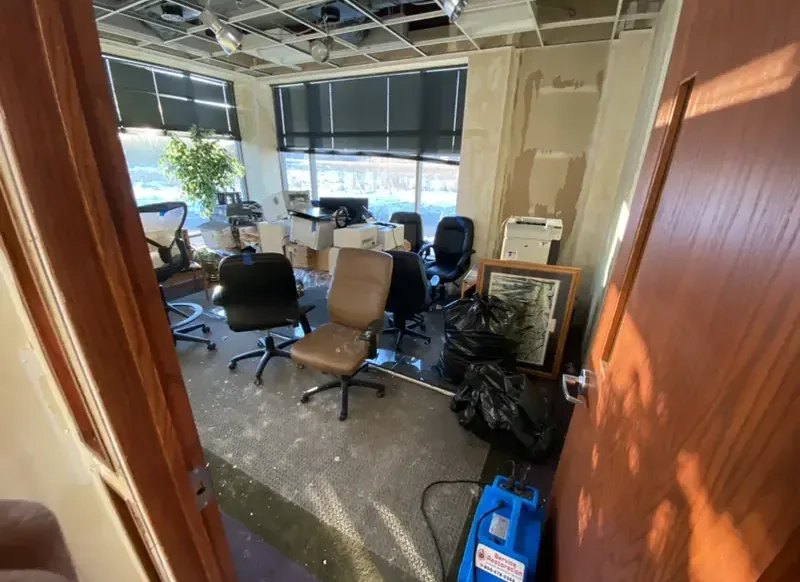
First steps for commercial water damage
- Establish the decision making contact
Identify the manager or property representative who can provide access and approve work. Share landlord coordination needs and restricted spaces before equipment reaches the business entrance.
- Separate people from unsafe areas
Keep employees and customers away from standing water, unstable finishes and wet electrical equipment. Describe essential exits and alternate routes so the assessment can preserve safe movement.
- Document stock and equipment exposure
Photograph affected inventory, records and devices before relocation when safe. Distinguish wet contents from building damage so specialists can evaluate the appropriate recovery or replacement tasks.
- List operating priorities
Explain which activities depend on wet rooms and which can move elsewhere. These priorities support sequencing, while contamination, power safety and access determine which spaces remain usable.
How the team handles commercial water damage
Rapid local response
The response team prioritizes source control, safe entry and the full path of wet materials. A visible puddle is only the starting point for the assessment.
IICRC S500 drying standard
The drying technician measures affected assemblies, sets a dry reference and adjusts air movement and dehumidification to the materials that remain.
Claim-ready documentation
The mitigation file records photographs, moisture readings, removal decisions and equipment use. The property owner checks policy questions with the insurer.
Local water experts
The restoration assessment separates the water source from the damage it leaves behind. Plumbing repairs, safe electrical access and material drying each receive attention.
What does commercial water damage cost in Clayton, NC?
Commercial water damage costs in Clayton depend on the affected footprint, building materials and coordination needed around contents and access. Equipment service and lost business activity are separate considerations. The restoration estimate should describe treatment by work area so managers can evaluate phased recovery decisions.
Limited work-area damage
$2,000 to $4,000
- Defined room with practical access
- Targeted contents protection during cleanup
- Focused treatment of affected finishes
Several business rooms
$4,000 to $8,000
- Water crossing operating area boundaries
- Additional equipment and access planning
- More material handling and documentation
Extensive commercial loss
$8,000 to $20,000+
- Broad damage across business spaces
- Complex contents and occupancy coordination
- Expanded removal cleaning and drying
Compare the materials, water category and wet area with the cost planning calculator. An on-site assessment defines the work and any separate repairs.
The commercial water damage process
- 1
Survey rooms and constraints
Map water spread and inspect connected layers. Discuss access with the property contact and identify contents requiring specialist assessment before routine handling begins.
- 2
Protect contents and work zones
Arrange controlled routes around retained operating spaces. Separate dry stock from exposed items and document movement so removal remains traceable during the disruption.
- 3
Treat affected materials
Select extraction, cleaning and drying for the source and actual assemblies. Coordinate equipment with safe access, monitoring needs and spaces approved for limited continued use.
- 4
Document the room handoff
Check material readings and remaining damage by room. Record completed work, outstanding repairs and separate equipment issues before management makes final decisions about occupancy.
A leak in a workroom can affect more than the floor beneath it. Stock may block inspection, equipment may need specialist evaluation and employees may rely on the only doorway through the wet area. Begin with a layout of affected spaces and essential access needs so recovery decisions account for both people and building materials.
Map operations before moving equipment
Main Street is the historic core of the Clayton community, and the historic district includes part of downtown's commercial area. An existing business space may have fixed counters, storage rooms and connected partitions. Record the actual layout and identify which activities can be separated safely from extraction, removal and drying work.
- Assign a property contact who can authorize access and explain restricted rooms, stored inventory and operating priorities.
- Keep employees and customers out of wet electrical areas and rooms with unstable overhead or floor finishes.
- Photograph exposed stock and equipment before relocation when safe, using clear item descriptions for the damage record.
- Identify a protected route for hoses and removed materials that does not conflict with an essential exit.
Distinguish building recovery from equipment service
Restoration assesses affected floors, walls and retained structure. Computers, production equipment and other business systems may need separate specialist evaluation. Equipment safety requires its own professional assessment. Keep the equipment assessment distinct and avoid powering affected devices before the responsible professional determines their condition.
A business may have dry rooms that remain usable, but shared access and utilities still matter. The work plan should describe boundaries, equipment placement and how people reach the retained operating space. Phasing should follow those practical conditions instead of relying only on a room's visual appearance.
Account for public facing schedules and access
The Clayton Center is a performing arts and conference venue sharing a building with Town Hall. For any public facing property, clarify the expected occupancy and access control during assessment. This information helps sequence work areas while keeping safety and material recovery central to decisions about reopening or continued operation.
Prepare a handoff that a manager can use
Keep the source report, room photographs and moisture record organized by affected area. List remaining construction tasks and any separate equipment decisions. A clear record helps managers coordinate the next contractor and understand why a cleaned room may still need finish repairs before it resumes its normal business function.
Review flood safety precautions before entering a wet building and EPA indoor air quality information when planning cleanup.
Commercial water damage in Clayton
Provide the business entrance, manager contact and affected operating areas when describing a loss near Main Street or The Clayton Center. Include delivery restrictions, locked rooms and any separate clean entrance available for employees or equipment access.
The same service nearby: commercial water damage in Smithfield, Wendell, Selma.
Related water damage services in Clayton



Commercial Water Damage questions in Clayton
Can a business remain open while one room dries?
That depends on contamination, electrical conditions and a safe route around the work. Dry rooms may still share affected systems. The assessment should define usable boundaries before employees or customers continue occupying part of the property.
Who should coordinate access during commercial cleanup?
A designated manager or property representative should explain restrictions and approve work. Clear responsibility aligns access, contents movement and landlord requirements while avoiding conflicting instructions during a disrupted operating period.
Are wet computers included in ordinary building drying?
Affected devices need appropriate specialist evaluation before use. Building restoration addresses wet assemblies and room conditions. Keep equipment inspection and recovery decisions separate so a dry floor is not mistaken for safe electrical or operational equipment.
What records help explain a business water loss?
Organize photographs, source findings and material readings by room, with separate lists for stock and equipment. This structure connects the restoration work to affected areas and helps managers coordinate repairs after extraction and drying are complete.
Can cleanup be divided into successive work areas?
Phasing may be practical when safe separation and access can be maintained. Water spread, shared assemblies and equipment needs determine the sequence. The work plan should explain those constraints before promising continued use of adjoining space.
What should happen before an affected room reopens?
Check source control, cleaning, retained material condition and repairs. Include any separate equipment clearance and access concerns. Reopening is an operational decision that should use the completed restoration record and the actual condition of the room.
Organize the work around safe access
Arrange a room based assessment and separate contents record. Clear boundaries and documented material progress help managers coordinate cleanup, specialist equipment evaluation and the repair phase that follows.