Commercial Water Damage in Dunn
A business water loss affects more than finishes. Managers need to understand which rooms are unsafe, which contents need protection and how cleanup routes will interact with staff access, equipment and the remaining usable space.
(888) 578-4720Discuss the affected business areas- Access coordination
- Contents documentation
- Staged material recovery
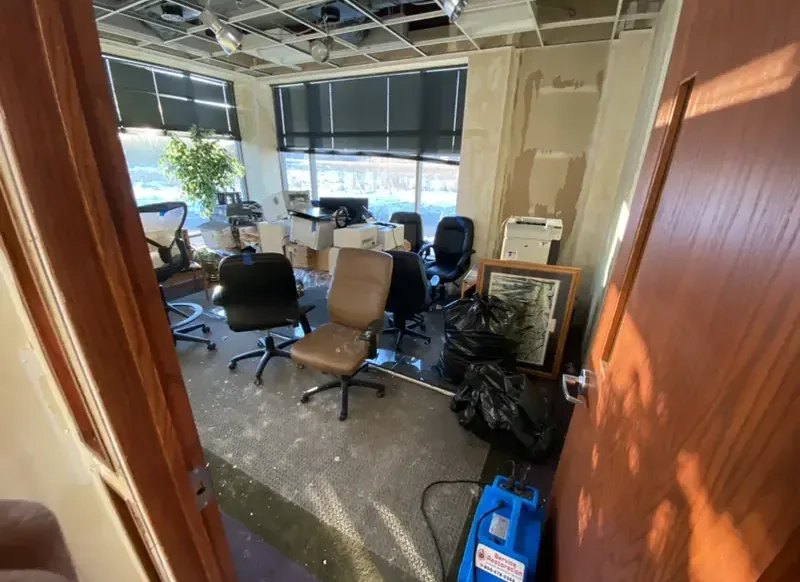
First steps for commercial water damage
- Assign a property decision contact
Identify who provides access, approves contents movement and receives updates. This helps when inspection reveals wet material behind fixtures or in rooms initially thought to be unaffected.
- Mark occupied and restricted areas
Keep staff and visitors outside hazardous spaces. Describe essential routes and equipment access so the cleanup plan considers safety alongside the practical layout of the business.
- Record inventory before moving stock
Photograph damaged items and keep room-based lists. Separate dry stock from wet contents so handling does not create another loss inside the proposed temporary storage area.
- Explain shared building constraints
Mention keys, loading doors, stairs and adjoining occupants. These details support equipment placement, removal routes and communication with anyone whose access could change during cleanup work.
How the team handles commercial water damage
Rapid local response
The response team prioritizes source control, safe entry and the full path of wet materials. A visible puddle is only the starting point for the assessment.
IICRC S500 drying standard
The drying technician measures affected assemblies, sets a dry reference and adjusts air movement and dehumidification to the materials that remain.
Claim-ready documentation
The mitigation file records photographs, moisture readings, removal decisions and equipment use. The property owner checks policy questions with the insurer.
Local water experts
The restoration assessment separates the water source from the damage it leaves behind. Plumbing repairs, safe electrical access and material drying each receive attention.
What does commercial water damage cost in Dunn, NC?
Commercial water damage in Dunn has planning ranges from $2,000 to $20,000+. Affected floor area, contents handling, access restrictions and the water source shape the estimate. Building cleanup, specialized equipment service and business reconstruction should be described clearly as separate work where applicable.
Limited work-area damage
$2,000 to $4,000
- Localized water in accessible workspace
- Defined contents and equipment protection
- Focused material inspection and drying
Several business rooms
$4,000 to $8,000
- Connected offices or storage areas
- Additional access and contents coordination
- Broader monitoring across affected assemblies
Extensive commercial loss
$8,000 to $20,000+
- Widespread building and inventory contact
- Complex occupied-space and removal routes
- Larger coordinated recovery and disposal scope
Compare the materials, water category and wet area with the cost planning calculator. An on-site assessment defines the work and any separate repairs.
The commercial water damage process
- 1
Assess operating boundaries
Identify source status, wet rooms and hazards. Consider management priorities alongside those conditions so any partial occupancy proposal reflects the actual work area and usable access.
- 2
Recover water and protect contents
Coordinate extraction and handling around the agreed route. Record damaged stock and equipment separately from building materials that need removal, cleaning or inspection after exposure.
- 3
Dry with area updates
Place equipment around safe circulation and material access. Report progress by room where practical, explaining changes when concealed moisture or contamination expands the original cleanup scope.
- 4
Provide a repair handoff
Record material condition and remaining reconstruction. Those details help managers coordinate contractors, contents return and room access without treating liquid removal as completion of every task.
A wet workspace can interrupt access to stock or equipment even when the business's front room remains dry. Commercial cleanup in Dunn begins with a map of affected and usable areas, not just a puddle estimate. The manager's priorities, the building's safety conditions and the water source together determine how removal and drying can proceed around operations.
Separate business continuity from the cleanup boundary
The Dunn Commercial Historic District is nationally listed, and Clinton Avenue meets Cumberland Street in central Dunn. In an affected downtown building, the usual customer entrance may also be the easiest equipment route. That conflict needs discussion early so hoses, removed materials and contents handling do not block an essential passage through the premises.
- Identify a property contact who can approve access and receive updates when newly exposed materials change the cleanup scope.
- List wet storage rooms, customer areas and workspaces separately so the condition of each room remains clear during recovery.
- Keep stock and records from the affected area distinct from dry inventory before moving items to another business space.
- Describe electrical equipment, floor hazards and access restrictions that may require attention before staff can use adjoining areas safely.
Document contents and assemblies on separate tracks
A stock list and a building moisture record answer different questions. Contents documentation identifies damaged items and handling decisions, while the material assessment addresses walls, floors and concealed cavities. Combining those descriptions into one vague room label can make later repair decisions harder to understand, especially when some inventory leaves before the structure finishes drying.
Clinton Avenue follows U.S. Route 301, and Cumberland Street carries U.S. Route 421. Those references help locate a business, but the manager should also explain locked doors, loading access and occupied work areas. Current entrance restrictions matter when planning equipment movement and protected removal routes.
Hand back rooms with a clear status
Some losses allow work to proceed by area, while contamination, electrical concerns or shared access can require a broader closure. The assessment should explain those constraints rather than assume continued operation. Each affected room needs a clear description of remaining drying equipment, open assemblies and the repairs required before normal use resumes.
Structural drying records help connect the initial water loss with the reconstruction handoff. Managers can then distinguish a room cleared of liquid from one whose materials are ready for finishes. That distinction supports decisions about staff movement, contents return and the order in which repair contractors reenter the property.
Review flood safety precautions before entering a wet building and EPA indoor air quality information when planning cleanup.
Commercial water damage in Dunn
The Dunn Commercial Historic District and the crossing of Clinton Avenue with Cumberland Street provide downtown references. For an affected business, identify the working entrance, occupied areas and any restriction on equipment or material movement inside.
The same service nearby: commercial water damage in Smithfield, Benson, Selma.
Related water damage services in Dunn



Commercial Water Damage questions in Dunn
Can a business stay open during cleanup?
That depends on hazards, contamination and whether safe separation is practical. The assessment should identify usable areas and access routes before management decides how staff or customers can move around the active work zone.
Who should approve movement of wet inventory?
The business should identify an authorized contact for contents decisions. Documentation before movement helps preserve item condition and location, while the handling plan keeps wet or contaminated stock separate from inventory that remains undamaged.
Can work proceed one room at a time?
Staging may be possible when access and material conditions allow it. Shared cavities, contamination or essential exit routes can connect rooms, so the scope should explain where separate phases are workable and where broader restrictions apply.
Is computer or machinery repair included?
Specialized equipment assessment may require a separate provider. The cleanup scope should state how those items are protected and handled while distinguishing building extraction, material drying and reconstruction from repair of the business's operating equipment.
Why are records organized by affected area?
Room-specific notes make changes and handoffs easier to follow. A manager can see which space still contains wet materials, which contents moved and what repair remains before staff or stock returns to normal use.
What helps coordinate a landlord and business operator?
A shared description of affected areas, access authority and separate work scopes helps both parties. Cleanup records should identify building materials and business contents clearly so responsibility discussions use the same account of the observed damage.
Make room status clear for management
Discuss removal, contents handling and drying together. Written area updates help coordinate staff access and contractors before the affected workspace returns to normal use.