Commercial Water Damage in Benson
A wet business needs decisions about stock, customer access and building materials at the same time. An organized scope separates affected areas, establishes safe work routes and coordinates drying with the property's operating needs.
(888) 578-4720Assess the affected business areas- Stock and contents triage
- Controlled customer routes
- Documented building moisture
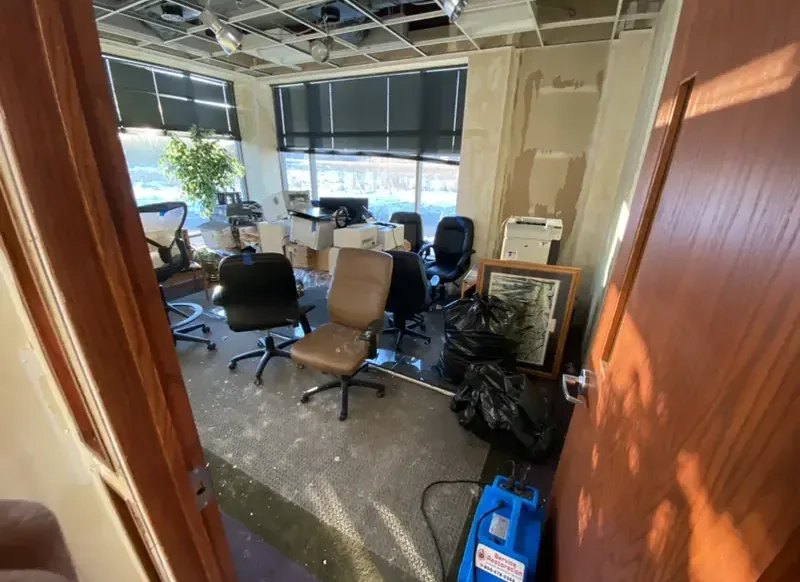
First steps for commercial water damage
- Identify a property contact and work route
Identify the access coordinator and staff, customer and delivery entrances. Clear routes help equipment movement while separating occupied spaces from affected work areas.
- Separate stock records from building records
Photograph wet merchandise, furnishings and fixed finishes as distinct groups when safe. Keep item information available so later removal decisions remain understandable after the original room arrangement has changed.
- Avoid testing wet business equipment
Do not restart devices or machinery that received water before appropriate evaluation. Record their location and condition while electrical and equipment specialists address whether handling or use is suitable.
- Describe shared spaces and continued occupancy
Mention connected tenants, rooms below and areas still needed for operations. Safe separation depends on the actual wet boundary and circulation pattern rather than a plan to reopen by a fixed time.
How the team handles commercial water damage
Rapid local response
The response team prioritizes source control, safe entry and the full path of wet materials. A visible puddle is only the starting point for the assessment.
IICRC S500 drying standard
The drying technician measures affected assemblies, sets a dry reference and adjusts air movement and dehumidification to the materials that remain.
Claim-ready documentation
The mitigation file records photographs, moisture readings, removal decisions and equipment use. The property owner checks policy questions with the insurer.
Local water experts
The restoration assessment separates the water source from the damage it leaves behind. Plumbing repairs, safe electrical access and material drying each receive attention.
What does commercial water damage cost in Benson, NC?
Commercial water damage restoration in Benson may range from $2,000 to $4,000 for a limited work area to $8,000 to $20,000+ for extensive loss. Access, contents coordination, affected assemblies and contamination influence the building scope, while specialist equipment or stock work may require separate arrangements.
Limited work-area damage
$2,000 to $4,000
- Water within a defined business area
- Accessible finishes and limited contents movement
- Focused equipment around affected building materials
Several business rooms
$4,000 to $8,000
- Connected offices storage or customer areas
- More coordination around continuing property access
- Drying across different interior construction layers
Extensive commercial loss
$8,000 to $20,000+
- Broad spread beneath fixed business furnishings
- Greater material handling and cleaning demands
- Complex equipment layout and progress documentation
Compare the materials, water category and wet area with the cost planning calculator. An on-site assessment defines the work and any separate repairs.
The commercial water damage process
- 1
Set the affected work boundaries
Inspect the source and building connections with the property representative. Set boundaries that protect occupants and allow equipment and material movement.
- 2
Remove water and document contents
Extract accessible water while recording affected stock and furnishings. Separate building mitigation from contents work, with removal decisions based on contact, condition and the needs of the business space.
- 3
Dry around retained assemblies
Arrange equipment for the walls, floors and concealed areas that remain wet. Assess access and progress together so business activity does not block the materials still needing attention.
- 4
Prepare a clear occupancy handoff
Document drying results, unfinished repairs and restricted areas. Support decisions about work space use with the established property condition and the requirements of the next repair stage.
Water beneath a display, desk or storage rack can interrupt more than the room where the leak began. Commercial restoration in Benson needs an account of building damage and business contents, along with the routes people use. The downtown core includes shops, eateries and service venues, so the affected property's use belongs in the initial assessment.
Establish who needs access to which area
A work route should protect unaffected occupants while equipment and removed materials move through the property. Identify staff entrances, customer circulation and shared spaces before setting the cleanup boundary. Electrical hazards, unstable finishes or contamination can limit use even when a neighboring section appears visibly dry.
- Record wet inventory separately from fixed building finishes and furnishings affected by the same release.
- Identify equipment that needs specialist evaluation instead of testing it while water remains nearby.
- Describe shared partitions or rooms below the loss that may require coordinated moisture inspection.
- Keep delivery and customer routes clear of hoses, removed materials and temporary drying equipment.
Match the scope to the actual operation
Main Street follows North Carolina Highway 50 through town, and Wall Street carries U.S. Route 301 through central Benson. A business on either corridor may have limited indoor circulation around stock or fixtures. The equipment layout needs to follow that interior arrangement, with work phases explained when separate areas can be treated safely.
Continued operation depends on access, electrical conditions, contamination and separation from active work. A room that looks unaffected may still share a wet partition or an equipment route. The assessment should identify these connections before any decision about reopening or maintaining ordinary customer access.
Follow water behind fixed commercial finishes
The historic district includes both business premises and surrounding residential blocks. At a property near Macon Hotel, record any connected occupancy and the actual wall or floor arrangement. Water can remain beneath counters, behind storage systems and inside layered partitions after the open floor has been extracted.
Inventory records and photographs help distinguish damaged stock from materials removed to reach the structure. Keep source repair information alongside drying documentation so the property representative can explain the work to other parties. A clear scope also identifies tasks requiring separate equipment or contents specialists.
Make the return to use a documented decision
Final measurements should describe the condition of retained building materials and areas ready for reconstruction. Structural drying supports that decision with progress records. The closing plan should identify unfinished source repairs, replacement finishes and any area still excluded from normal business activity.
Review flood safety precautions before entering a wet building and EPA indoor air quality information when planning cleanup.
Commercial water damage in Benson
Businesses along Main Street, Wall Street and the Benson Historic District can describe stock areas, customer entrances and shared interior access. The restoration scope follows affected rooms and materials rather than assuming a particular business layout.
The same service nearby: commercial water damage in Smithfield, Dunn, Selma.
Related water damage services in Benson



Commercial Water Damage questions in Benson
Can part of a business remain open?
Possibly, when safe access and suitable separation are established. Electrical conditions, contamination and shared wet assemblies must be assessed before an apparently dry room is treated as independent from the active restoration area.
Are damaged stock and building finishes assessed together?
Both belong in the loss record, but their handling can differ. Inventory, specialist equipment and fixed construction need distinct decisions so the building drying scope does not obscure separate contents treatment or replacement needs.
Why inspect another occupied unit or room?
Shared walls, floors and overhead spaces can carry moisture beyond the first business area. Coordination may be needed to inspect those connections and determine whether adjoining occupants or their finishes are affected by the release.
Should equipment be moved after business hours?
Changes should be coordinated with the restoration plan. Equipment position supports particular wet assemblies, and moving it for convenience can alter drying performance or create access problems when the space is occupied again.
Will the cleanup estimate include all business losses?
The estimate should state its building and contents scope clearly. Stock replacement, equipment evaluation and other business concerns may require separate arrangements, so the property representative needs an explicit account of what is included.
What supports a decision to resume ordinary use?
Appropriate source repair, completed cleanup and suitable moisture conditions provide part of the basis. Remaining reconstruction, access restrictions and specialist equipment concerns also need resolution before the affected area returns to its intended business activity.
Build a workable plan for the property
Commercial water damage in Benson needs clear source, contents and drying records. Explain which areas remain occupied and who coordinates access before planning the next stage of work.