Water Heater Leak Cleanup in Wendell
A puddle beside a water heater can spread through a closet opening or beneath a shared wall. Cleanup starts with safe source isolation, then checks the enclosure and the rooms reached by the escaped water.
(888) 578-4720Inspect the tank area water spread- Heater source control
- Enclosure inspection
- Adjacent floor drying
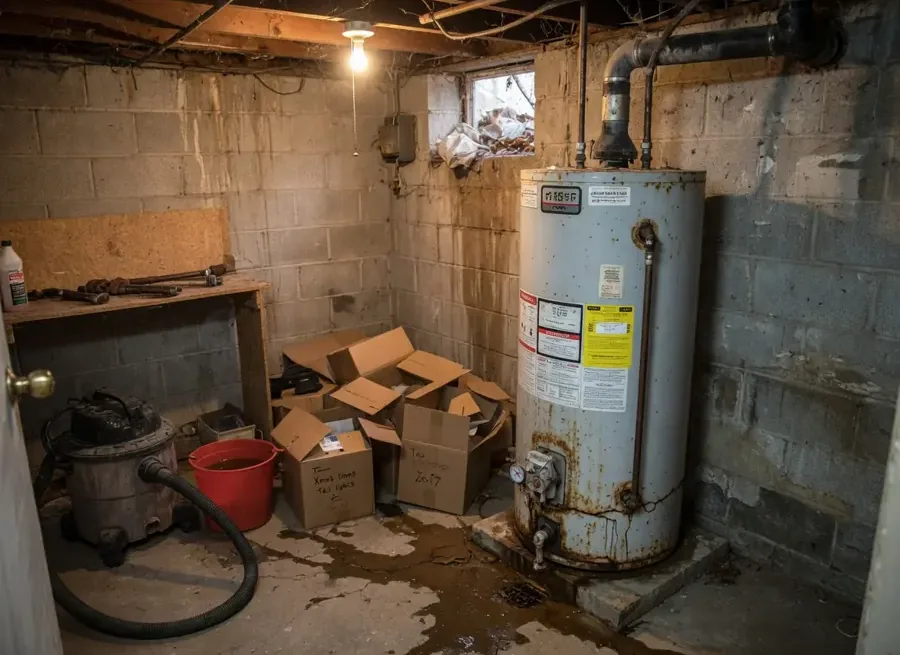
First steps for water heater leak cleanup
- Avoid contact with the release
Water around the heater may be hot, and energy connections may be affected. Occupants should keep clear until the source and equipment condition can be addressed safely.
- Arrange appropriate isolation
A qualified service professional can assess the heater and its connections. Describe whether the tank is still releasing water and any observed electrical or access concern before work begins.
- Look beyond the enclosure
From a dry safe position, note wet trim, flooring changes or water entering the adjacent room. These details help identify where the removal and moisture inspection should extend.
- Coordinate stored item handling
A crowded utility space can hide saturated boxes or restrict equipment placement. A planned clearance route protects dry rooms and gives access to the wall and floor around the tank.
How the team handles water heater leak cleanup
Rapid local response
The response team prioritizes source control, safe entry and the full path of wet materials. A visible puddle is only the starting point for the assessment.
IICRC S500 drying standard
The drying technician measures affected assemblies, sets a dry reference and adjusts air movement and dehumidification to the materials that remain.
Claim-ready documentation
The mitigation file records photographs, moisture readings, removal decisions and equipment use. The property owner checks policy questions with the insurer.
Local water experts
The restoration assessment separates the water source from the damage it leaves behind. Plumbing repairs, safe electrical access and material drying each receive attention.
What does water heater leak cleanup cost in Wendell, NC?
Water heater leak cleanup in Wendell has planning amounts from $700 to $5,500+. The enclosure materials, adjoining room spread and access beneath the tank affect the work. Heater replacement and plumbing repairs should appear separately from the mitigation scope.
Contained tank-area loss
$700 to $1,500
- Accessible enclosure water
- Checks of supporting finishes
- Focused drying beside the tank
Adjoining room damage
$1,500 to $2,500
- Water beyond the utility threshold
- Additional trim and flooring assessment
- Equipment serving connected wet areas
Concealed or extensive spread
$2,500 to $5,500+
- Moisture beneath restricted support areas
- More involved access around partitions
- Wider material treatment before reinstatement
Compare the materials, water category and wet area with the cost planning calculator. An on-site assessment defines the work and any separate repairs.
The water heater leak cleanup process
- 1
Assess source and access
The inspection establishes the heater's isolation status and maps water around the enclosure, considering the energy system and any restriction on approaching the affected support area.
- 2
Collect water around finishes
Accessible liquid is removed while the condition of stored items, trim and adjacent floor covering is assessed. Concealed edges are checked for continued movement into other rooms.
- 3
Expose wet supporting layers
Tank service and selective finish access are coordinated where needed. The retained floor and wall assembly are treated with equipment suited to the actual materials and space.
- 4
Document the installation handoff
Readings and photos identify what is ready for enclosure repair or heater installation and what still needs treatment before new equipment or finishes limit the available drying access.
The floor directly around a tank is only the first inspection area. Escaped water can follow a partition base, pass through the heater enclosure threshold or soak material beneath the appliance. A clear recovery plan separates the professional's heater diagnosis from removal of the water and treatment of the interior materials already affected.
Start with the actual heater location
A property in Wendell Falls may place the heater differently from a home near Carver Elementary School or Hollybrook Park. The assessment therefore starts with the installed enclosure, surrounding finishes and available access. Closets, utility spaces and adjoining rooms each present different opportunities for water to move out of sight before the leak is noticed.
Source isolation involves both the water supply and the heater's energy system. Hot water, wet electrical components and restricted space can make improvised handling hazardous. The appropriate service professional should establish a safe condition before the tank is moved or the area is opened for inspection of the supporting floor and wall base.
Inspect beyond a catch pan or visible puddle
A pan can show where water collected, but nearby seams and penetrations still need checking. Moisture may reach the floor outside the enclosure through a low opening. Stored items can conceal the boundary, and a cabinet or shared wall may remain wet after the accessible tile or concrete has been wiped down.
- Check the enclosure threshold and adjacent flooring for swelling, softened edges or ongoing dampness.
- Identify belongings stored against the tank area before they are moved into a dry room.
- Coordinate tank removal or replacement with access needed to inspect the supporting material underneath.
Give the base of the assembly room to dry
The drying approach depends on the actual surface and layers below it. If floor covering or trim limits access, selective removal may be needed to expose retained moisture. Where water has spread into timber flooring, the hardwood damage page explains the need to evaluate boards and their supporting assembly together.
Replacement solves the equipment problem, while moisture recovery remains a separate task. Inspecting the exposed area during the change can help identify wet support materials before a new heater or fresh trim restricts access again.
Coordinate the final installation and repair
The plumber and mitigation scope should account for each other's access needs. Records can identify what was wet beneath the tank, what has been retained and what needs further treatment. A planned sequence keeps the replacement installation from hiding unfinished drying and gives adjoining room repairs a clearer starting point once the structure is ready.
Review flood safety precautions before entering a wet building and EPA indoor air quality information when planning cleanup.
Water heater leak cleanup in Wendell
Water heater cleanup in Wendell covers affected interiors in ZIP 27591. The tank location, safe access and any water appearing outside its enclosure help establish which adjoining rooms and finishes need assessment after the source is isolated.
The same service nearby: water heater leak cleanup in Smithfield, Clayton, Selma.
Related water damage services in Wendell



Water Heater Leak Cleanup questions in Wendell
Does every puddle mean the tank has failed?
The heater and its connections need diagnosis by the appropriate service professional. Cleanup follows the observed water damage, while that separate investigation establishes the source and whether repair or replacement of equipment is needed.
Can the heater be moved to reach the water?
Moving a connected tank involves plumbing and energy considerations as well as weight. The service professional should coordinate safe isolation and movement before mitigation treats any wet support material concealed beneath the appliance.
Why check the room beside the heater closet?
Water can travel through the threshold or beneath a shared partition. Adjacent trim and flooring may retain moisture even when the enclosure puddle is small, making the adjoining room part of the inspection.
Will a catch pan prevent all interior damage?
The actual route and amount of escaped water determine the damage. Inspection checks the pan area, nearby openings and connected finishes to establish where liquid went and which materials absorbed it during the release.
Can a replacement tank be installed before drying ends?
The installation and mitigation tasks should be coordinated around access. If the support area remains wet, placing equipment over it can restrict treatment, so the condition of those materials belongs in the installation discussion.
What paperwork separates the two kinds of work?
The heater service record explains source diagnosis and repair. Mitigation notes identify affected materials, removal and drying, with photographs and readings supporting the work needed around the equipment and in adjoining interior spaces.
Complete the recovery around the replacement
A coordinated assessment can preserve access to wet support materials before installation and finish repairs proceed. The result is a clearer plan for the tank area and connected rooms.