Water Heater Leak Cleanup in Clayton
A puddle at the tank base can disappear beneath a wall before it reaches an open doorway. Cleanup examines the utility space and connected rooms while a qualified professional addresses the heater and its connections.
(888) 578-4720Assess water around the tank base- Heater safety coordination
- Partition edge checks
- Utility room drying
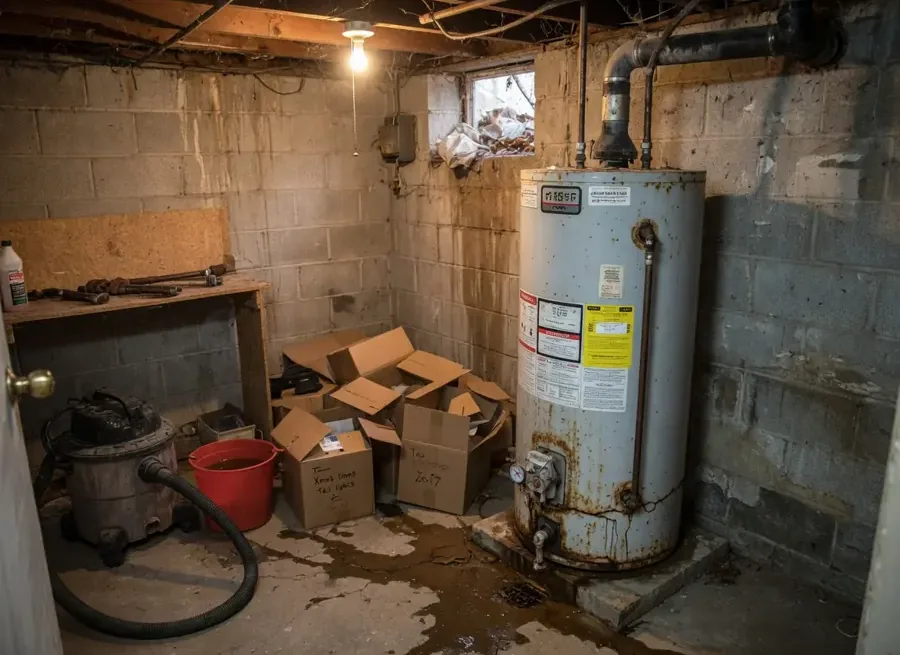
First steps for water heater leak cleanup
- Stay clear of wet controls
Avoid touching the heater's electrical controls or other energy connections when water is present. Arrange professional isolation and source assessment before cleanup work begins beside the equipment.
- Describe the tank surroundings
Mention a raised platform, closet enclosure, stored goods or fixed shelving around the heater. These details help explain access needs and the possible route into adjoining building materials.
- Check adjacent rooms from dry ground
Look for moisture at shared wall bases and door thresholds without crossing the puddle. Report any connected bedroom, storage area or hallway showing swelling or visible water.
- Coordinate access before replacement
Ask that wet surfaces beneath and around the tank remain available for inspection. Document the base condition before new equipment or trim conceals materials affected by the release.
How the team handles water heater leak cleanup
Rapid local response
The response team prioritizes source control, safe entry and the full path of wet materials. A visible puddle is only the starting point for the assessment.
IICRC S500 drying standard
The drying technician measures affected assemblies, sets a dry reference and adjusts air movement and dehumidification to the materials that remain.
Claim-ready documentation
The mitigation file records photographs, moisture readings, removal decisions and equipment use. The property owner checks policy questions with the insurer.
Local water experts
The restoration assessment separates the water source from the damage it leaves behind. Plumbing repairs, safe electrical access and material drying each receive attention.
What does water heater leak cleanup cost in Clayton, NC?
Water heater cleanup costs in Clayton depend on spread beyond the tank, wet support materials and access inside the utility space. Heater repair or replacement is a separate equipment task. The estimate should identify the building materials included in restoration.
Contained tank-area loss
$700 to $1,500
- Water beside an accessible tank
- Support and floor checks
- Targeted utility space drying
Adjoining room damage
$1,500 to $2,500
- Moisture crossing a shared partition
- Connected floor and trim assessment
- Additional access and material handling
Concealed or extensive spread
$2,500 to $5,500+
- Hidden saturated layers around equipment
- More involved removal and coordination
- Broader drying before finish reconstruction
Compare the materials, water category and wet area with the cost planning calculator. An on-site assessment defines the work and any separate repairs.
The water heater leak cleanup process
- 1
Inspect equipment area conditions
Establish a safe working route after the heater has been assessed. Identify pooled water, wet storage and the surfaces immediately below the tank or support platform.
- 2
Remove water around fixed objects
Extract from accessible floor areas and recesses beside the equipment footprint. Separate damaged contents and record hidden spaces that need further access before drying can be effective.
- 3
Evaluate partitions and support materials
Measure nearby wall bases, platform components and connected flooring. Decide which wet materials can remain and coordinate any necessary opening with the plumbing replacement or repair work.
- 4
Restore the utility space condition
Track retained material moisture and check any ongoing seepage. Provide the final drying record and list of remaining finish tasks without obstructing normal access to the repaired equipment.
The tank is the obvious object in a heater leak, but the room around it often controls the cleanup scope. Water can soak the platform, reach stored cartons or cross beneath a partition. Before replacement equipment hides those surfaces again, inspect the base area and determine which building materials need treatment.
Give the heater its own safety assessment
Hot water, electrical components and other energy connections can make the immediate area unsafe. Occupants should avoid touching wet controls or attempting unfamiliar disconnection work. A suitable professional can evaluate the heater while restoration work is arranged around safe access to the water and surrounding wet materials.
- Describe whether water is dripping from a connection or accumulating beneath the tank without reaching into the equipment.
- Check adjoining rooms from dry access points for damp baseboards, swollen flooring or water emerging at a threshold.
- Move unaffected storage away from the working route only when the utility area can be approached safely.
- Keep photographs of the platform and surrounding floor before a replacement tank covers the same footprint again.
Check replacement requirements before assuming an exemption
Clayton lists specific conditions for a permit exempt heater replacement in a dwelling. Changes to energy use, fuel, location, venting or piping can affect that determination. The installing plumbing contractor should confirm the applicable requirements with the inspection department before the replacement scope is finalized.
A new heater can sit above materials that were saturated by the old one. The replacement plan should allow the platform and surrounding surfaces to be inspected and treated. Document any retained wet layers so appliance installation and building recovery do not obstruct one another.
Look at the space on the other side
Cleveland, Powhatan and Flowers use Clayton mailing addresses outside the town limits. Wherever the utility space is located, inspect the reverse side of a shared partition when water has reached its base. A bedroom or closet may show the first obvious sign of migration even when most water remains near the heater.
Fixed shelving can also hide a wet edge. Access decisions should follow the material readings and visible damage, with stored contents handled separately from the structure. A small utility room may need a careful equipment arrangement to reach retained surfaces without blocking the doorway or service access.
Finish with a usable equipment area
After source correction and drying, check the condition of the platform, nearby wall finishes and floor. The room should have a clear record of remaining repairs and suitable access around the installed equipment. Any continuing moisture needs investigation before damaged trim or coverings are replaced.
Review flood safety precautions before entering a wet building and EPA indoor air quality information when planning cleanup.
Water heater leak cleanup in Clayton
Identify the heater's room, access door and any adjoining occupied space when describing the loss. For addresses near Powhatan or Flowers, provide the actual property location because a Clayton mailing address can extend beyond the town limits.
The same service nearby: water heater leak cleanup in Smithfield, Wendell, Selma.
Related water damage services in Clayton



Water Heater Leak Cleanup questions in Clayton
Does a replacement heater solve the water damage?
Replacement addresses the failed equipment. The platform, walls and flooring still need inspection for water retained from the release. Coordinate those checks before the new tank makes the surrounding surfaces harder to reach.
Should the heater be moved immediately?
Equipment movement involves plumbing and energy connections that require appropriate professional handling. The cleanup team needs safe access, but disconnection should be coordinated with the person responsible for repairing or replacing the heater.
Why inspect a room beside the utility closet?
Water can pass beneath a shared wall before it appears at the doorway. Moisture checks on the other side help locate affected flooring or trim that would be missed by examining only the tank area.
Can wet storage boxes stay in the room?
Absorbent cartons can retain water and obstruct access to the floor. Assess their contents and move or dispose of affected packaging appropriately. Keep dry belongings separate so equipment placement and material inspection remain practical.
Is every heater replacement exempt from a plumbing permit?
The town's exemption has specific installation conditions. Changes to the heater arrangement or connections can require evaluation. The installing contractor should confirm the requirements for the proposed replacement with the appropriate inspection department.
What should the final cleanup record include?
Identify affected room materials, removal work and retained surface readings. Include any unresolved platform or finish repair needs so the equipment installation and building restoration can be completed with a clear division of responsibility.
Recover the space around the repaired heater
Plan the building cleanup alongside the equipment work. Checking the support area and nearby partitions keeps the restoration scope connected to where the released water traveled.