Water Heater Leak Cleanup in Selma
A puddle beneath a heater can hide water traveling under a wall or floor finish. Selma tank leak cleanup starts after safe equipment isolation and checks the surrounding assembly beyond the visible pool around the base.
(888) 578-4720Discuss water escaping the heater- Safe tank isolation
- Surrounding floor checks
- Adjacent room drying
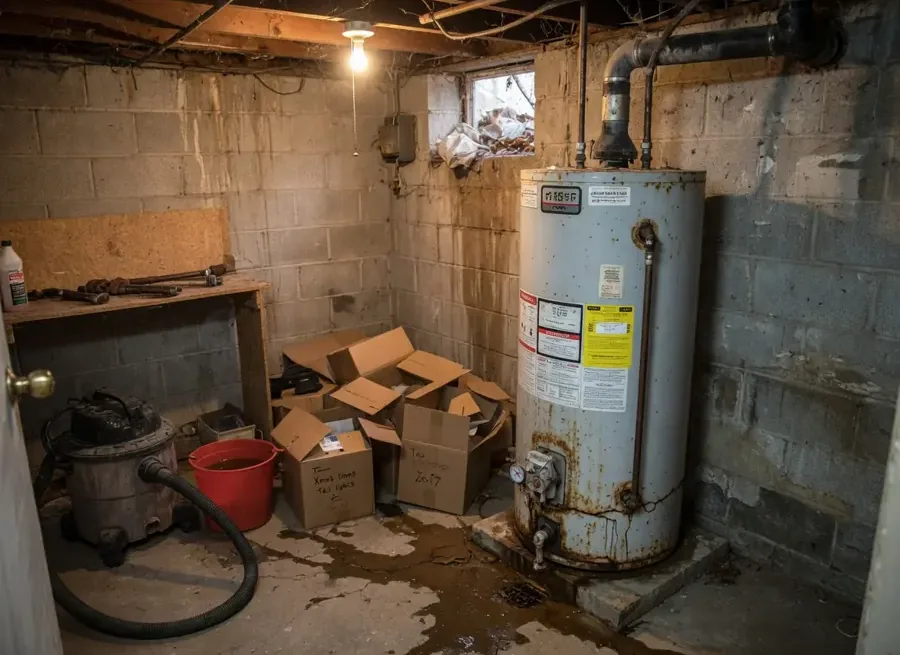
First steps for water heater leak cleanup
- Keep clear of wet connections
Water near the heater's electrical or fuel components needs professional attention. Occupants should avoid reaching across the puddle to adjust controls or disconnect equipment before safe isolation.
- Note the first wet location
A photograph of the tank base and nearby room edges can help show the initial spill. Record observations without moving the heater or disturbing its connected plumbing components.
- Identify adjoining finished rooms
Tell the assessor where the utility space connects to living or working areas. A small release can pass below a doorway before the central puddle becomes obvious.
- Coordinate the tank service visit
Access for equipment repair and room cleanup should be considered together. The space behind a removed tank may need inspection before a replacement makes the area difficult to reach.
How the team handles water heater leak cleanup
Rapid local response
The response team prioritizes source control, safe entry and the full path of wet materials. A visible puddle is only the starting point for the assessment.
IICRC S500 drying standard
The drying technician measures affected assemblies, sets a dry reference and adjusts air movement and dehumidification to the materials that remain.
Claim-ready documentation
The mitigation file records photographs, moisture readings, removal decisions and equipment use. The property owner checks policy questions with the insurer.
Local water experts
The restoration assessment separates the water source from the damage it leaves behind. Plumbing repairs, safe electrical access and material drying each receive attention.
What does water heater leak cleanup cost in Selma, NC?
Water heater leak cleanup costs in Selma reflect the spill area and how much flooring or wall material absorbed water. The tank repair or replacement is a separate equipment decision. Hidden moisture behind the heater can broaden the cleanup estimate.
Contained tank-area loss
$700 to $1,500
- Accessible water around tank
- Limited adjoining finish contact
- Focused tank area extraction
Adjoining room damage
$1,500 to $2,500
- Spill entering finished rooms
- Checks around adjoining thresholds
- Drying across connected surfaces
Concealed or extensive spread
$2,500 to $5,500+
- Saturation beneath flooring layers
- Restricted rear equipment access
- Broader removal during drying
Compare the materials, water category and wet area with the cost planning calculator. An on-site assessment defines the work and any separate repairs.
The water heater leak cleanup process
- 1
Confirm safe equipment access
The work plan accounts for heater isolation and the route into the room. Conditions around connections and standing water determine when cleanup personnel can approach the damaged area.
- 2
Remove the surrounding pool
Accessible water is extracted from the tank area and any connected floor surfaces. Photographs preserve the spill footprint before equipment service or material movement changes it.
- 3
Assess obscured room edges
The inspection checks the support, rear wall and nearby thresholds. Saturated finishes receive retention or removal decisions based on condition and the available route for drying moisture.
- 4
Check before reinstallation closes access
Material conditions are documented around the serviced equipment. Any wet support or wall area needing more attention is identified before remaining repairs make the surfaces inaccessible again.
The tank is the obvious object in a heater leak, but the surrounding room carries much of the water damage. A thin sheet can slip beneath nearby trim, cross a doorway or collect under a finish before anyone notices a large puddle. Cleanup should follow that movement after a qualified professional has addressed the heater's water and energy connections.
Stabilize the equipment before moving it
A wet heater can involve hot water and electrical or fuel equipment. Occupants should avoid handling connections or attempting to shift the tank through standing water. The equipment professional determines safe isolation and whether repair or replacement is needed. Restoration then addresses the water already released into the room and connected building materials.
On Anderson Street, which links the depot area to downtown, access arrangements may involve a business interior. A clear route for heater service and extraction avoids repeatedly moving contents across a wet floor. The assessment should note fixed storage, narrow doorways and materials concealed directly behind or beneath the tank.
Inspect the spill at floor level
A drain near the heater can reduce visible pooling while some water still reaches adjacent finishes. Inspection should look at the base support, wall edges and the next room rather than assume that the drain captured everything. Photographs taken before tank removal help preserve the relationship between the original pool and nearby damage.
- Check door thresholds where a shallow release could have crossed into a different flooring material.
- Inspect wall bases behind the heater when service access makes those surfaces available for assessment.
- Distinguish wet removable contents from fixed layers that need equipment or selective opening to dry.
Use the actual room arrangement
West Selma Historic District is primarily residential, and the heater location must be identified at each property. A confined enclosure, open utility area or space adjoining finished rooms creates different drying access. Air movement should reach wet surfaces without obstructing the equipment contractor's safe work or concealing damp materials behind a replacement tank.
The period when the old tank is removed offers a view of its support and surrounding surfaces. Coordinating that inspection helps identify moisture that would become harder to reach after new equipment is installed.
Finish the room as well as the equipment
For a property near Pollock Street, source correction and water extraction may happen in the same work sequence, but they answer different questions. The room needs a drying check, a record of removed finishes and a clear plan for any repairs around the new or repaired heater.
Review flood safety precautions before entering a wet building and EPA indoor air quality information when planning cleanup.
Water heater leak cleanup in Selma
A heater loss near Anderson Street or Pollock Street needs an access description that reaches the actual tank location. West Selma Historic District contains residences where the specific room arrangement should be assessed before cleanup is planned.
The same service nearby: water heater leak cleanup in Smithfield, Clayton, Benson.
Related water damage services in Selma



Water Heater Leak Cleanup questions in Selma
Does replacing the heater resolve the room damage?
Replacement addresses the equipment source. Water beneath flooring, behind the tank or in adjacent wall bases still needs inspection and drying decisions before the room repair is complete.
Should the tank be moved to mop underneath?
Moving connected equipment can create additional hazards. Heater service should establish safe isolation and handling, while cleanup planning takes advantage of any access created during professional removal.
Can a floor drain hide a larger wet area?
A drain may carry away some water while a shallow flow reaches other surfaces. Room edges and adjoining finishes should be checked even when the central floor has little pooling.
Why inspect before a new tank is installed?
The exposed support and rear wall can reveal damage that is difficult to reach later. Coordinating this check helps avoid enclosing a damp surface behind the replacement equipment.
What information helps plan the heater cleanup?
The tank location, surrounding floor finish and connected rooms are useful. Mention any visible electrical exposure, difficult doorway or wet belongings without approaching unsafe equipment to gather more detail.
Can an adjoining room need drying without a puddle?
Water can pass beneath a finish or wall base. Measurements at transitions help identify that hidden spread even when the room surface feels dry and no standing water is visible.
Restore the space surrounding the heater
Safe equipment service stops the source. Inspection and drying address the floor, support and wall materials left wet around it before replacement closes access.