Slab Leak Water Damage in Wendell
Damp floor seams can be the first visible sign of a concealed plumbing escape. Locating the source and checking the actual floor assembly come before choosing access, extraction or a drying approach for the damaged interior.
(888) 578-4720Assess moisture above the slab- Leak location
- Floor layer inspection
- Controlled access
First steps for slab leak water damage
- Keep the damp area visible
Avoid covering damp flooring with stored items or a loose rug. A clear view helps document the original pattern before the source investigation and moisture assessment begin.
- Arrange source diagnosis
A concealed plumbing leak needs appropriate locating and repair. The damaged finish should not be treated as the source until the actual water path and affected pipe are identified.
- Describe floor changes
Lifted seams, softened trim and changes near adjoining rooms help shape the moisture map. Mention when those changes first appeared and whether the area remains damp after surface wiping.
- Discuss access boundaries
The repair opening, contents movement and possible floor removal should be explained before work proceeds. Separate permissions and scopes keep plumbing access distinct from recovery of the wet interior.
How the team handles slab leak water damage
Rapid local response
The response team prioritizes source control, safe entry and the full path of wet materials. A visible puddle is only the starting point for the assessment.
IICRC S500 drying standard
The drying technician measures affected assemblies, sets a dry reference and adjusts air movement and dehumidification to the materials that remain.
Claim-ready documentation
The mitigation file records photographs, moisture readings, removal decisions and equipment use. The property owner checks policy questions with the insurer.
Local water experts
The restoration assessment separates the water source from the damage it leaves behind. Plumbing repairs, safe electrical access and material drying each receive attention.
What does slab leak water damage cost in Wendell, NC?
Slab leak cleanup in Wendell has planning ranges from $1,500 to $10,000+. Floor layers, concealed spread and access influence the mitigation amount. Leak locating, pipe repair and replacement flooring should be identified separately when the full recovery budget is discussed.
Limited wet flooring
$1,500 to $3,000
- Assessment around a limited patch
- Access to affected floor edges
- Targeted treatment of exposed layers
Several affected assemblies
$3,000 to $6,000
- Moisture across floor wall junctions
- Additional removal beneath damaged finishes
- Drying of connected interior materials
Extensive concealed spread
$6,000 to $10,000+
- Wider access under retained coverings
- Complex conditions around concealed saturation
- More involved preparation for reinstatement
Compare the materials, water category and wet area with the cost planning calculator. An on-site assessment defines the work and any separate repairs.
The slab leak water damage process
- 1
Map above slab symptoms
Visible changes are recorded alongside readings at floor edges and wall bases, establishing where the affected assembly extends beyond the apparent starting point of the leak.
- 2
Coordinate with pipe access
The locating and repair findings inform mitigation access. Exposed layers are checked for moisture, damage and any condition that changes which floor materials can remain.
- 3
Treat the retained assembly
Water removal and drying target the accessible structure. Floor coverings that prevent effective treatment are assessed individually before selective removal or additional access is proposed.
- 4
Assess replacement requirements
The drying record is compared with the needs of the planned finish. Any further substrate preparation or testing belongs in the reinstatement discussion before new flooring arrives.
A softened floor edge or damp patch above concrete needs careful diagnosis. The first question is where the water originates; the next is which layers have absorbed it. A plumbing specialist locates the concealed leak while the restoration assessment maps damage at the finished floor, wall bases and any adjacent room transitions.
Identify the assembly before choosing an opening
Wendell Falls, the surroundings of Lake Myra Elementary and properties near Hollybrook Park are useful settings for arranging a visit. They do not replace inspection of the individual building. The assessor establishes whether the affected area has concrete beneath its finish and how the installed flooring, adhesive or underlay responds to the moisture already present.
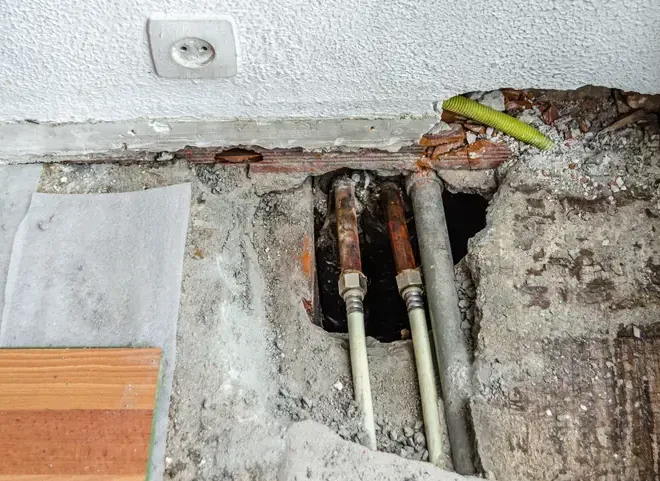
A targeted pipe repair can create an opening through the floor, but that opening serves the plumbing task. The drying area may extend beyond it. Moisture can remain beneath intact coverings where a surface inspection seems reassuring. Readings around the damage perimeter help distinguish a limited wet patch from a larger assembly requiring access.
Plan around the installed finish
Tile, wood and resilient coverings allow different inspection and recovery options. Debonding, swelling and contamination can change the retention decision. Removing a small section may reveal trapped moisture or damaged adhesive that would otherwise remain hidden. The proposed scope should state the reason for access and protect nearby material that remains sound.
- Record damp joints and wall edges before access changes the visible pattern across the room.
- Compare the repair opening with the wider moisture map to identify any untreated wet layers.
- Keep replacement flooring out of the affected area until the supporting assembly meets suitable conditions.
Concrete and covering need separate checks
The exposed surface can lose moisture before the assembly is ready for a new covering. Drying progress needs measurements suited to the materials and the planned replacement. Where wood flooring is affected, the hardwood recovery page explains why the condition beneath the boards matters as much as their visible appearance.
The place where a plumber reaches the pipe may be smaller than the area needing drying. A clear record separates the concrete opening, damaged floor covering and surrounding wet finishes so each part receives the appropriate attention.
Build a usable record for reinstatement
Notes should connect the source repair with the materials uncovered during mitigation. Photos, moisture readings and the reasons for selective removal help the next trade understand the condition left behind. Before a replacement finish is installed, its substrate requirements should be reviewed alongside the drying record, rather than relying on the absence of a visible wet mark.
Review flood safety precautions before entering a wet building and EPA indoor air quality information when planning cleanup.
Slab leak water damage in Wendell
Slab leak damage assessments in Wendell cover the affected property in ZIP 27591. The floor construction, known pipe location and current source control determine the inspection plan rather than a neighborhood wide assumption about foundations.
The same service nearby: slab leak water damage in Smithfield, Clayton, Selma.
Related water damage services in Wendell



Slab Leak Water Damage questions in Wendell
Does damp flooring establish a slab plumbing leak?
Dampness identifies a symptom requiring investigation. The water can have different origins, so the source professional locates the actual leak while mitigation documents the affected floor and connected interior materials before access is planned.
Will the entire floor need removal?
The decision depends on the installed covering, moisture distribution and whether useful drying access exists. Selective inspection can identify a smaller repair boundary, while widespread saturation or damaged adhesion may require a broader removal area.
Who chooses where to open the concrete?
The plumbing investigation determines access to the failed pipe. The restoration assessment addresses the surrounding damage, and both scopes should be coordinated so the repair opening and material recovery needs are understood before work starts.
Can wood above concrete be dried in place?
Potential retention depends on the wood, attachment method, moisture conditions and damage. An intact upper face is insufficient by itself; inspection must account for the underside and any moisture trapped between the boards and concrete.
Why delay a replacement floor after the puddle disappears?
A dry looking surface may still contain moisture that affects a new covering or adhesive. The assembly should meet the planned product's substrate requirements before installation, with drying records available for the repair discussion.
What details help estimate the cleanup?
The affected rooms, type of floor covering, source status and likely access needs are useful. A written estimate can then distinguish liquid removal, material drying and selective demolition from separate plumbing and finish restoration work.
Make room for a sound floor repair
A clear plan identifies what the plumber needs to reach and what the wet interior needs to dry. That distinction helps organize access, protect retained finishes and prepare for appropriate reinstatement.