Roof Leak Water Damage in Dunn
Rainwater can collect in insulation before an indoor stain develops. Roof leak cleanup examines the route from the upper assembly into ceilings and walls, with safe source control coordinated separately from interior material drying.
(888) 578-4720Discuss rain reaching the rooms- Attic moisture
- Ceiling inspection
- Interior recovery
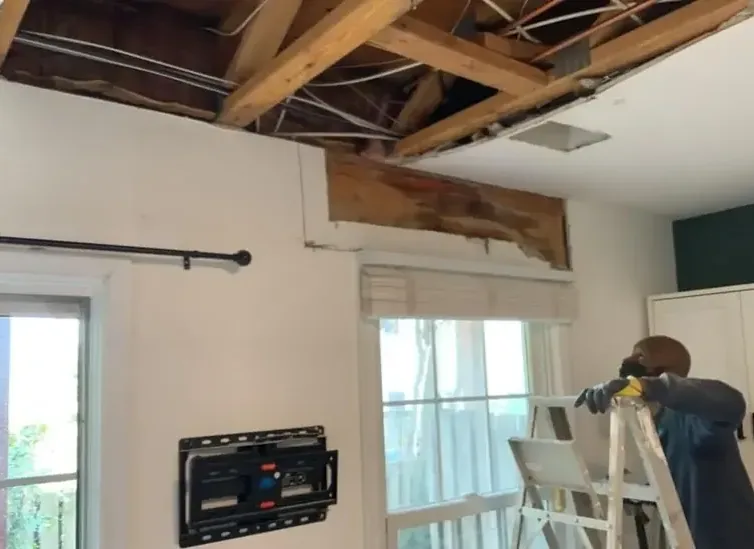
First steps for roof leak water damage
- Stay off the wet roof
Roof access belongs with appropriately equipped workers. The owner can document indoor changes from dry ground without climbing onto exposed surfaces during unsettled weather.
- Keep clear of softened ceilings
A sagging finish can release debris or retained water. Move activity away from the affected section and report bulging, cracking or wet fixtures before the interior area is entered.
- Note rain and stain timing
Save photographs showing when dripping begins and stops. A mark that continues growing after rain ends can help the inspection account for water retained above the visible room finish.
- Explain the attic entrance conditions
Mention a blocked hatch, stored contents or limited footing without entering a hazardous space. Those details help plan safe access for evaluating wet insulation and the surrounding framing.
How the team handles roof leak water damage
Rapid local response
The response team prioritizes source control, safe entry and the full path of wet materials. A visible puddle is only the starting point for the assessment.
IICRC S500 drying standard
The drying technician measures affected assemblies, sets a dry reference and adjusts air movement and dehumidification to the materials that remain.
Claim-ready documentation
The mitigation file records photographs, moisture readings, removal decisions and equipment use. The property owner checks policy questions with the insurer.
Local water experts
The restoration assessment separates the water source from the damage it leaves behind. Plumbing repairs, safe electrical access and material drying each receive attention.
What does roof leak water damage cost in Dunn, NC?
Roof leak water damage in Dunn has cleanup examples from $1,000 to $8,000+. Wet attic materials, ceiling access and the number of connected rooms shape the estimate. Roofing work and final interior reconstruction should be separated clearly from the mitigation scope.
Single indoor leak area
$1,000 to $2,000
- Localized ceiling contact
- Accessible route above stains
- Limited opening and drying
Attic and ceiling damage
$2,000 to $4,000
- Wet insulation needing individual assessment
- Framing moisture above occupied rooms
- Expanded protection during overhead access
Several connected spaces
$4,000 to $8,000+
- Rainwater traveling through adjoining assemblies
- Additional ceiling and wall openings
- Broader drying and disposal scope
Compare the materials, water category and wet area with the cost planning calculator. An on-site assessment defines the work and any separate repairs.
The roof leak water damage process
- 1
Coordinate source and interior work
Roof entry and material damage are connected tasks. The indoor inspection identifies protection needs while roofing work addresses further rain penetration.
- 2
Inspect the upper moisture route
Framing, insulation and ceilings are checked along the water path. Findings determine whether inspection extends into a wall or another overhead space.
- 3
Open and dry affected assemblies
Unsuitable materials are removed as needed. Controlled conditions address moisture in accessible framing and cavities beyond the visible ceiling surface below.
- 4
Record the interior repair condition
Handoff notes describe dried materials, discarded insulation and finish repairs. Roof source status remains documented for comparison if staining appears again.
A roof leak can leave an attic wet while the room below appears almost normal. By the time paint darkens or a joint drips, insulation and timber above the finish may have absorbed water. Dunn interior cleanup therefore considers the whole route rather than treating the visible ceiling spot as the full extent of the loss.
Connect the rain pattern with the indoor damage
Dunn has a humid subtropical climate, with a listed July precipitation average of 5.93 inches. When a property develops a leak during rain, note which room changes first and whether the mark expands afterward. These observations help coordinate a roofer's entry investigation with the interior inspection of materials that remain wet after the weather clears.
- Photograph fresh staining and any change around ceiling joints from a secure position beneath an unaffected area.
- Identify available attic access without climbing into a space containing wet wiring, unstable surfaces or concealed openings.
- Keep furnishings away from active dripping when a dry and safe approach allows them to be moved.
- Record whether water reaches a partition corner, since that route can connect overhead wetting with hidden wall moisture.
Account for insulation and framing together
Insulation can hold water against other materials and obstruct inspection. Its condition, contamination exposure and practical drying prospects need consideration before it is retained. Framing may need a different drying approach from the ceiling finish beneath it. The scope should explain why each affected component stays, is opened or is removed.
Cumberland Street carries U.S. Route 421, and Clinton Avenue carries U.S. Route 301. At a property near either corridor, distinguish roof access from the indoor equipment entrance. Keeping those routes clear allows source repair and material recovery to proceed with less conflict around occupied rooms.
Finish indoors after entry and moisture are resolved
Temporary source control or a roof repair reduces further wetting, but absorbed water still needs attention. The indoor drying plan should include the ceiling cavity and any wall or floor reached by dripping. Closing an opening before those checks can hide retained moisture behind a new decorative surface.
Interstate 95 passes through eastern Dunn. Wherever the affected property is located, the owner should have a clear account of the roof work and the interior work. Ceiling leak cleanup explains the overhead material assessment when rain has softened drywall, stained trim or spread into an adjoining partition.
Review flood safety precautions before entering a wet building and EPA indoor air quality information when planning cleanup.
Roof leak water damage in Dunn
Dunn properties along Cumberland Street, Clinton Avenue and the eastern Interstate 95 corridor can describe the affected room and attic access. Mention active rain entry and any ceiling movement before interior inspection is arranged.
The same service nearby: roof leak water damage in Smithfield, Benson, Selma.
Related water damage services in Dunn



Roof Leak Water Damage questions in Dunn
Can the ceiling dry after the roof is patched?
Some retained moisture may remain above the finish even after entry stops. Inspection of the cavity and insulation determines whether drying access or material removal is needed before the ceiling is repaired.
Should attic insulation always be left in place?
Its condition and the ability to dry the surrounding assembly govern retention. Saturated or otherwise unsuitable insulation can conceal damp surfaces and may need removal to permit useful inspection and material recovery.
Why is the stain away from the roof opening?
Water can follow framing, fasteners or other surfaces before dropping onto the ceiling. Tracing that route helps connect the roof entry location with the indoor materials affected along the way.
Can belongings remain beneath an active drip?
Belongings should be moved only through safe access and kept outside the affected boundary. Avoid reaching beneath unstable ceiling material; protection or removal can be planned after the overhead condition is assessed.
Is roof replacement included in interior cleanup?
The work scopes should state that explicitly. Interior extraction, material removal and drying address the building damage, while roof repair or replacement addresses entry and may be performed under a separate agreement.
What if another stain appears after the room dries?
Record the timing and location and compare it with the earlier moisture route. A new inspection can determine whether entry has resumed or whether a previously concealed area needs additional attention.
Move from roof entry to material recovery
A repaired roof and a dry ceiling cavity are separate milestones. Discuss the insulation, framing and room finishes before the final surface repairs close the affected assembly.