Ceiling Leak Water Damage in Dunn
A ceiling stain marks where water became visible, not necessarily where it entered. Assessment traces the route above the room while keeping people and belongings away from sagging finishes and wet electrical fixtures.
(888) 578-4720Describe the overhead water marks- Source tracing
- Overhead stability
- Cavity assessment

First steps for ceiling leak water damage
- Move activity out from beneath the damage
Keep the area below a bulge or sag clear. Do not place a ladder under unstable material or puncture the ceiling to release water into the occupied room.
- Report wet electrical fixtures
A wet light, fan or detector requires electrical attention. Avoid associated switches and fixtures until a qualified assessment establishes how the area can be approached safely.
- Note when the mark changes
Record whether dripping follows rain, fixture use or a continuing supply leak. The timing helps the source investigation follow the route above the ceiling instead of guessing from appearance.
- Photograph from a safe position
Include wall corners, trim and affected contents. These images explain the original condition before coverings, access openings or removal change the appearance of the room.
How the team handles ceiling leak water damage
Rapid local response
The response team prioritizes source control, safe entry and the full path of wet materials. A visible puddle is only the starting point for the assessment.
IICRC S500 drying standard
The drying technician measures affected assemblies, sets a dry reference and adjusts air movement and dehumidification to the materials that remain.
Claim-ready documentation
The mitigation file records photographs, moisture readings, removal decisions and equipment use. The property owner checks policy questions with the insurer.
Local water experts
The restoration assessment separates the water source from the damage it leaves behind. Plumbing repairs, safe electrical access and material drying each receive attention.
What does ceiling leak water damage cost in Dunn, NC?
Ceiling leak cleanup in Dunn has planning examples from $800 to $6,500+. Access height, wet insulation, adjoining partitions and the number of overhead assemblies affect the scope. The estimate should distinguish source repairs and later decorating from removal and drying.
Limited ceiling area
$800 to $1,800
- Small accessible damaged ceiling section
- Localized inspection above visible stains
- Focused drying of exposed materials
Ceiling and partition spread
$1,800 to $3,000
- Water entering adjoining wall cavities
- Additional trim and insulation decisions
- Drying checks beyond overhead opening
Multiple overhead assemblies
$3,000 to $6,500+
- Connected ceiling areas needing access
- Broader protection beneath removal work
- More extensive concealed moisture assessment
Compare the materials, water category and wet area with the cost planning calculator. An on-site assessment defines the work and any separate repairs.
The ceiling leak water damage process
- 1
Assess overhead condition and entry
Stability, electrical concerns and the likely water route shape access before material above the room is disturbed or removed during inspection.
- 2
Expose the necessary wet cavity
Finishes and insulation receive individual decisions. Openings follow the moisture path beyond the darkest ceiling patch where connected surfaces also need access.
- 3
Dry accessible overhead materials
Equipment manages conditions around the exposed assembly. Monitoring follows framing and adjacent surfaces so retained moisture receives attention before the cavity closes.
- 4
Prepare the finish repair record
Photos and readings document cavity condition at handoff. Source repairs, trim replacement and decorating remain separate tasks after the overhead cleanup stage.
A ceiling that begins to bulge changes how the room should be used. People should remain clear of the affected area while its condition is assessed. In Dunn, a useful first description distinguishes a flat stain from sagging material, active dripping or water around a light fitting. Each observation affects safe access.
Trace the route above the visible stain
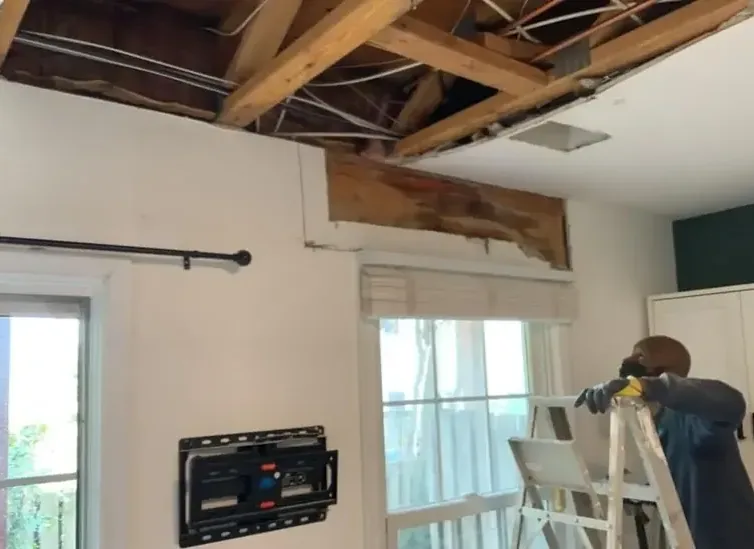
Water can travel along framing or across an upper floor before reaching the ceiling below. The investigation considers roof entry, plumbing and fixtures above the room. Opening only the darkest patch may leave wet insulation or another damp cavity outside the inspection area, so the moisture route matters as much as the visible mark.
- Record the shape of the stain and whether it changed during rain or use of an upstairs fixture.
- Keep people away from sagging finishes and avoid probing a bulge from a ladder beneath the damaged area.
- Include wall corners and trim where water leaving the ceiling may have continued downward into another building assembly.
- Photograph nearby furnishings before their removal changes the record of dripping water and affected contents below the ceiling.
Protect the room while access is created
Clinton Avenue and Cumberland Street meet in central Dunn. For a property near that crossing, as elsewhere in the city, access planning should identify a dry route into the room. Overhead work can release wet debris, making protection below the opening and separation from occupied space part of the cleanup scope.
The Dunn Commercial Historic District has a National Register listing. Where an affected ceiling contains distinctive trim or other detailed finishes, photographs and measurements help preserve a repair reference. The decision to retain material still depends on its actual stability, water contact and practical drying access.
Close the cavity after its condition is assessed
Replacing drywall too early can conceal wet framing or insulation. The drying assessment should address exposed materials above the opening and connected wall edges, with observations recorded before the finish returns. A dry-looking underside is insufficient when the cavity remains damp.
Ceiling cleanup can connect with roof leak recovery or pipe damage assessment once the source is known. The final scope should explain source repair, any discarded materials and the remaining finish work so repainting becomes the last step of a resolved moisture problem.
Review flood safety precautions before entering a wet building and EPA indoor air quality information when planning cleanup.
Ceiling leak water damage in Dunn
Dunn ceiling assessments can start with an access description referencing Clinton Avenue, Cumberland Street or the Dunn Commercial Historic District. Identify the affected room, any floor above it and whether overhead dripping remains active.
The same service nearby: ceiling leak water damage in Smithfield, Benson, Selma.
Related water damage services in Dunn


Ceiling Leak Water Damage questions in Dunn
Can a ceiling stain be painted immediately?
Paint should follow source correction and the material assessment. Covering a stain while the cavity remains wet conceals the problem and can interfere with deciding which finishes need drying or replacement.
Is it safe to puncture a bulging ceiling?
A bulge can release water and unstable material unpredictably. Keep clear of the area beneath it and arrange an assessment that accounts for overhead stability, electrical fixtures and controlled access to the cavity.
Why inspect the wall below the stain?
Water reaching a ceiling edge can continue down a partition or behind trim. That route may leave retained moisture outside the obvious overhead patch, so connected surfaces deserve checks where water contact is indicated.
Does every ceiling leak come from the roof?
Plumbing, an upstairs fixture and roof entry can produce similar visible marks. The timing and path of wetting help the investigation distinguish sources before repair work is assigned to the appropriate trade.
Can decorative trim remain during cleanup?
Retention depends on condition, attachment and access to wet material behind it. Photographs of the original profile and arrangement help the repair plan if removal becomes necessary to inspect or dry the assembly.
What signals readiness to close the opening?
The source should be controlled and the exposed materials assessed for suitable dryness and condition. Records of that assessment help support closing the cavity and moving on to replacement finishes or repainting.
Resolve the cavity before the final coat
Ceiling recovery connects source tracing, stable materials and documented drying. Request a scope that explains the opening, the concealed moisture checks and the finish repair handoff.