Roof Leak Water Damage in Benson
Rainwater can leave a long indoor path from a small roof opening. Restoration follows that path through attic materials and ceiling connections while the roofing problem receives appropriate weather protection and repair.
(888) 578-4720Trace rainwater through the interior- Attic moisture inspection
- Wet insulation decisions
- Indoor rain damage cleanup
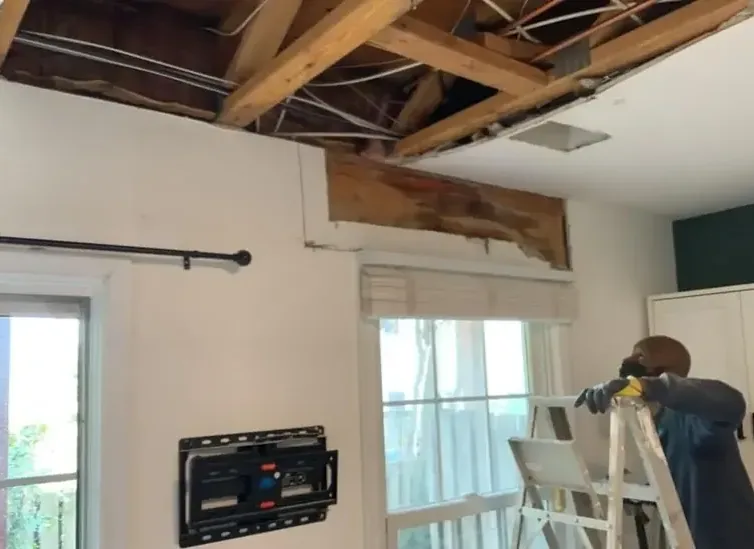
First steps for roof leak water damage
- Describe the rain and drip pattern
Note whether water appears during rainfall or continues afterward. Record affected ceiling corners and rooms from a dry position, avoiding any area beneath unstable overhead finishes.
- Keep roof access with appropriate workers
Do not climb onto a wet roof to locate the defect. Explain the visible indoor symptoms so roofing and restoration assessments can be coordinated safely around conditions.
- Identify the available attic entrance
Describe the access opening without entering an unsafe attic. Wet insulation, electrical components and damaged ceiling surfaces can make a seemingly simple inspection route unsuitable for entry.
- Separate belongings from falling water
Move suitable contents only when the room is safe. Keep wet possessions apart from clean items and record their condition before cleaning or disposal decisions are made.
How the team handles roof leak water damage
Rapid local response
The response team prioritizes source control, safe entry and the full path of wet materials. A visible puddle is only the starting point for the assessment.
IICRC S500 drying standard
The drying technician measures affected assemblies, sets a dry reference and adjusts air movement and dehumidification to the materials that remain.
Claim-ready documentation
The mitigation file records photographs, moisture readings, removal decisions and equipment use. The property owner checks policy questions with the insurer.
Local water experts
The restoration assessment separates the water source from the damage it leaves behind. Plumbing repairs, safe electrical access and material drying each receive attention.
What does roof leak water damage cost in Benson, NC?
Roof leak water damage in Benson may range from $1,000 to $2,000 for a single indoor area up to $4,000 to $8,000+ when several spaces connect. The interior estimate depends on attic access, wet insulation and ceiling damage, with roof work identified separately.
Single indoor leak area
$1,000 to $2,000
- Localized rain entry inspection
- Drying accessible materials
- Limited finish removal
Attic and ceiling damage
$2,000 to $4,000
- Wet insulation requiring separate decisions
- Access above the occupied room
- Connected framing and ceiling checks
Several connected spaces
$4,000 to $8,000+
- Rainwater reaching multiple interior assemblies
- Broader removal across overhead spaces
- More equipment and progress measurements
Compare the materials, water category and wet area with the cost planning calculator. An on-site assessment defines the work and any separate repairs.
The roof leak water damage process
- 1
Connect entry and interior damage
Assess the source status and inspect the accessible path beneath the roof. Locate wet framing, insulation and ceiling connections beyond the first mark visible downstairs.
- 2
Expose materials needing attention
Remove damaged layers where necessary for safe access and effective drying. Document finish condition so preservation choices and replacement needs remain clear through the work.
- 3
Dry the remaining overhead structure
Set airflow and dehumidification around the wet assembly after entry is controlled. Recheck concealed connections as progress reveals where moisture remains held inside the structure.
- 4
Prepare the reconstruction record
Identify dry materials, removed insulation and unfinished surfaces. Clarify roof repair status and remaining indoor work before closing the ceiling.
A roof drip may first show indoors as a damp ceiling corner, with a larger wet area concealed above. Benson roof leak restoration connects the exterior entry problem with the interior damage. A roofing repair stops further rain entry, while the restoration assessment identifies water already held by insulation, timber and ceiling finishes.
Trace the route beneath the roof covering
Water may run along framing before reaching an opening in the ceiling. The first visible mark is therefore a useful starting point for inspection, followed by checks along accessible attic surfaces. A clear description of when the drip occurs and which rooms show changes helps connect separate symptoms to the same entry path.
- Check insulation around the drip route for retained water and loss of usable condition.
- Inspect ceiling junctions where runoff can enter a partition before becoming visible below.
- Keep occupants away from softened overhead finishes or water around an electrical fixture.
- Coordinate temporary protection with appropriate roof work before relying on indoor drying equipment.
Respect the building's existing finishes
Macon Hotel and Preston Woodall House are among properties listed in the historic district. The surrounding downtown setting includes varied building uses and finishes. At the affected property, selective access should respond to its actual construction, preserving sound material when practical while exposing wet layers that cannot otherwise be evaluated or dried.
A clear ceiling surface does not show the condition of insulation above it. Material readings and direct inspection identify retained moisture. Damaged insulation can need removal even when adjacent framing remains suitable for drying, so each component should have a specific decision in the scope.
Coordinate exterior repair with indoor progress
Near Mary Duncan Public Library or elsewhere along Main Street, roof access and indoor access may involve different routes. The homeowner should know which work addresses the roof and which treats the rooms beneath it. Continued entry can undermine the drying effort, making source status a central part of progress checks.
Record conditions when the cavity is opened, including wet junctions and the extent of material removal. If water reached the occupied room, furniture and floor surfaces need inspection too. The loss should not be reduced to a ceiling patch merely because that stain appeared first.
Prepare a sound surface for reconstruction
Final moisture checks establish which remaining materials are ready for enclosure. Replacement insulation and ceiling repairs follow that assessment, with unresolved roof work clearly identified. For damage concentrated below the attic, ceiling restoration explains the overhead repair sequence and the checks needed before decoration.
Review flood safety precautions before entering a wet building and EPA indoor air quality information when planning cleanup.
Roof leak water damage in Benson
For rain damage near Main Street, Wall Street or the Benson Historic District, describe attic access and the rooms below. The indoor work plan depends on actual wet materials and coordination with the roof repair.
The same service nearby: roof leak water damage in Smithfield, Dunn, Selma.
Related water damage services in Benson



Roof Leak Water Damage questions in Benson
Does indoor restoration include repairing the roof?
The scope should identify roofing work separately. Interior restoration addresses wet materials below the defect, while appropriate roof repair or weather protection prevents further rain from entering during that work.
Why does dripping continue after the rain ends?
Water held in insulation or concealed surfaces can continue moving toward an opening. An attic assessment helps identify those wet layers and determines what needs removal or drying after entry stops.
Can all attic insulation dry in place?
Material condition and access determine the answer. Saturated or damaged insulation may need removal, particularly when it obstructs inspection or prevents effective drying of the surrounding framing and ceiling assembly.
Should a ladder be placed under the ceiling mark?
An unstable ceiling or wet electrical fitting makes that area unsuitable for casual inspection. Keep the space clear until overhead conditions and the available access route have been assessed safely.
Why check flooring during a roof leak?
Rainwater can pass through the ceiling and reach furniture or flooring. Those surfaces need their own moisture assessment when contacted, even when the main repair discussion initially centers on attic damage.
When can the attic and ceiling be closed?
Source control and suitable moisture readings come first. The remaining structure should be ready for enclosure, with damaged components replaced and any unfinished roofing work clearly addressed in the repair plan.
Bring the attic and room into one assessment
Roof related water damage in Benson needs coordinated source repair and drying. Mention any stained walls or wet flooring beneath the overhead damage when arranging the next step.