Ceiling Leak Water Damage in Benson
An expanding ceiling mark is the visible end of a water path. Overhead assessment connects the source with wet insulation, framing and wall junctions before a patch hides the cavity again.
(888) 578-4720Assess the overhead water path- Ceiling cavity inspection
- Source tracing
- Repair readiness checks

First steps for ceiling leak water damage
- Leave the overhead danger area clear
Move people away from a ceiling that sags, cracks or releases material. Do not stand beneath it to collect photographs or push a container into position.
- Describe the activity above the room
Note any bathroom, appliance or attic above the mark. The relationship between water use, weather and staining helps direct the source investigation before finish repairs begin.
- Avoid handling wet electrical fittings
Do not touch a light, fan or switch affected by overhead water. Electrical conditions need appropriate assessment before the fixture or nearby wet materials are disturbed.
- Keep the stain history available
Photographs and a brief discovery sequence help explain changing boundaries. Record whether the mark stopped growing after a source repair or continues to spread across the surface.
How the team handles ceiling leak water damage
Rapid local response
The response team prioritizes source control, safe entry and the full path of wet materials. A visible puddle is only the starting point for the assessment.
IICRC S500 drying standard
The drying technician measures affected assemblies, sets a dry reference and adjusts air movement and dehumidification to the materials that remain.
Claim-ready documentation
The mitigation file records photographs, moisture readings, removal decisions and equipment use. The property owner checks policy questions with the insurer.
Local water experts
The restoration assessment separates the water source from the damage it leaves behind. Plumbing repairs, safe electrical access and material drying each receive attention.
What does ceiling leak water damage cost in Benson, NC?
Ceiling leak restoration in Benson can range from $800 to $1,800 for a limited area to $3,000 to $6,500+ for multiple overhead assemblies. Access, insulation condition and water entering connected partitions influence the scope before cosmetic repairs are considered.
Limited ceiling area
$800 to $1,800
- Inspection around a localized mark
- Accessible overhead materials requiring drying
- A limited finish removal area
Ceiling and partition spread
$1,800 to $3,000
- Water reaching connected wall cavities
- Additional insulation and trim decisions
- Drying across adjacent overhead materials
Multiple overhead assemblies
$3,000 to $6,500+
- Several ceiling spaces holding moisture
- More difficult access above rooms
- Broader removal and monitoring requirements
Compare the materials, water category and wet area with the cost planning calculator. An on-site assessment defines the work and any separate repairs.
The ceiling leak water damage process
- 1
Assess overhead stability
Inspect the damaged ceiling and access conditions before work proceeds beneath it. Identify the source investigation and electrical attention needed for safe removal or cavity inspection.
- 2
Open where inspection requires
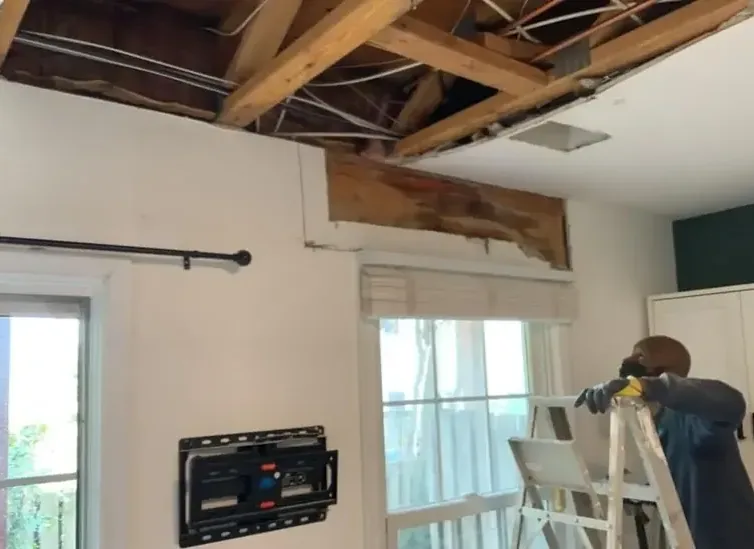
Create practical access to wet layers and remove unsound material. Check insulation and connected wall tops instead of limiting attention to the visible stain outline.
- 3
Dry the exposed assembly
Arrange equipment to reach remaining framing and cavity surfaces. Follow moisture changes at representative wet areas while keeping the room below protected from the work.
- 4
Define the finish repair area
Record the dry condition and components awaiting replacement. The handoff distinguishes completed moisture work from new board, trim and decoration needed to restore the room.
The first drip can appear at a light fitting or ceiling joint even when water entered elsewhere. A Benson ceiling assessment should begin with safe access and the room arrangement above, then follow wet materials back toward the source. The position of the stain helps organize inspection but does not replace checking the concealed cavity.
Protect the space beneath the damage
A bowed or softened ceiling needs room below it kept clear. Water around electrical fittings requires appropriate electrical assessment before equipment or fixtures are handled. Avoid puncturing a bulge or pulling loose board from underneath; the amount of retained water and the condition of the material need to be evaluated safely.
- Describe whether the mark grows during rain or when an upstairs fixture is used.
- Record adjoining wall discoloration where the ceiling meets a partition or enclosed plumbing chase.
- Keep furniture outside the overhead work area when it can be moved safely.
- Photograph changes from a stable dry position without standing beneath unstable ceiling material.
Inspect the cavity before selecting a patch
A room near Wall Street can contain several overhead materials with different drying needs. Insulation may hold water above board that appears nearly dry from below. Framing, pipe penetrations and the top of a partition should be checked where the release path connects them, with access selected around the actual damage.
Cosmetic repair covers a surface. Restoration first addresses the source and the wet assembly behind it. New board or paint should follow suitable moisture readings, sound remaining materials and a clear account of any insulation or trim that still needs replacement.
Connect the ceiling with the surrounding rooms
The Benson Historic District includes commercial space and nearby residential blocks. Whether the affected room serves a household or a business, the inspection needs its particular overhead layout. Water can reach a wall junction before dripping centrally, so adjoining surfaces may require testing even when the largest stain remains confined to the ceiling.
For a home in Eastwood Subdivision, report what occupies the space above and which source repairs have already occurred. This information helps separate a plumbing release from roof entry and keeps the drying plan focused on the remaining moisture.
Hand the room back with clear repair boundaries
Document the materials removed, cavities dried and surfaces awaiting reconstruction. If the source originated at the roof, roof leak cleanup adds attention to the attic path. Finish repairs should match the dry assembly identified during the final inspection.
Review flood safety precautions before entering a wet building and EPA indoor air quality information when planning cleanup.
Ceiling leak water damage in Benson
Ceiling damage near Main Street, Willa Chase or West Hale Subdivision needs a description of the space above the stain. Mention plumbing fixtures, an attic or another occupied room when explaining the overhead layout.
The same service nearby: ceiling leak water damage in Smithfield, Dunn, Selma.
Related water damage services in Benson


Ceiling Leak Water Damage questions in Benson
Why is the drip away from the leak?
Water can travel along framing, pipes or ceiling surfaces before finding an opening. Tracing the cavity helps connect the visible drip with the source and the materials wet between those points.
Can a ceiling dry without being opened?
Some limited damage may be accessible without broad removal. The decision depends on stability, retained moisture and wet insulation, so a surface inspection alone cannot settle the access question.
Should a sagging area be punctured?
Avoid standing under or puncturing unstable ceiling material. The cavity can hold water and damaged board, and electrical components may be involved. Safe assessment should come before any controlled removal.
Does old staining need the same response?
The source history and current moisture readings determine the work. A stable dry mark differs from active wetting, but the remaining finish still needs assessment before a cosmetic repair is chosen.
Will painting stop the mark returning?
Paint does not stop a water source or dry a cavity. Source correction and material evaluation come first, followed by repair of damaged components and suitable surface preparation before decoration.
Which adjoining areas should be checked?
Wall junctions, nearby partitions and the floor beneath the drip may need attention. Water movement inside the overhead assembly determines the inspection boundary rather than the size of the stain alone.
Resolve the cavity before restoring the surface
Ceiling damage in Benson needs a source explanation and a dry assembly. Include any completed repair and nearby wall staining when arranging the overhead assessment.