Water Heater Leak Cleanup in Benson
A wet ring around a heater can extend beneath the wall beside it. Cleanup begins with safe source isolation, then checks the tank base, utility room edges and adjoining finishes for water that escaped the visible area.
(888) 578-4720Evaluate the wet tank area- Safe source isolation
- Utility room moisture checks
- Adjacent finish assessment
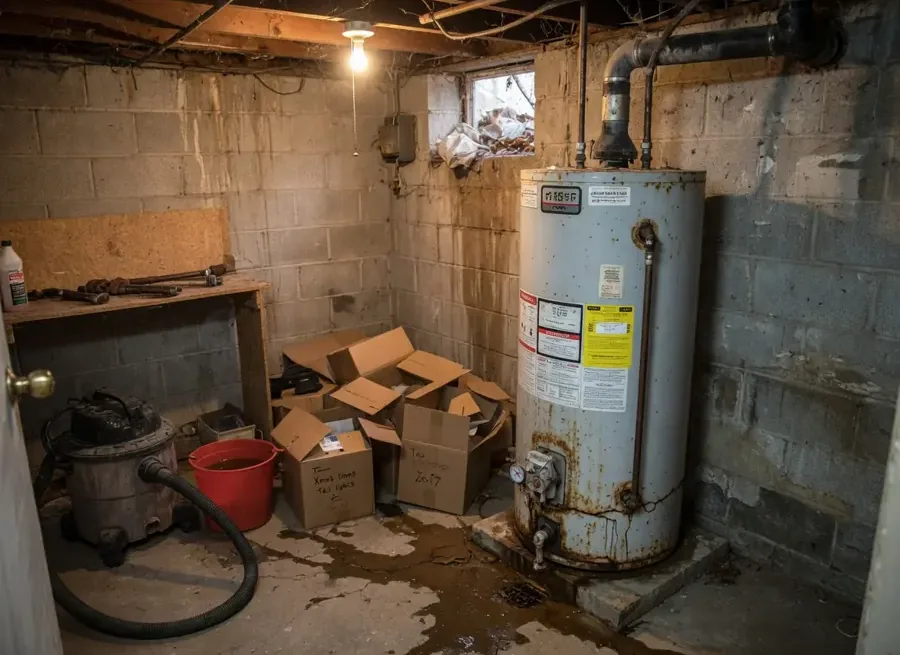
First steps for water heater leak cleanup
- Avoid unsafe appliance controls
Do not reach through standing water to operate electrical controls or handle a damaged heater. Describe the condition so source isolation can be addressed by an appropriate professional.
- Note where the water collects
Explain whether pooling is at the base, behind the tank or near a doorway. The location helps the assessment follow spread into surfaces hidden by the appliance.
- Clear safe access around storage
Move dry lightweight belongings only from a safe approach. Keep soaked items separate for inspection instead of stacking them in an unaffected room where water can spread.
- Keep appliance work and room work distinct
Ask which tasks repair the heater and which restore the building. This separation helps avoid replacing equipment while leaving moisture trapped beneath nearby finishes or utility storage.
How the team handles water heater leak cleanup
Rapid local response
The response team prioritizes source control, safe entry and the full path of wet materials. A visible puddle is only the starting point for the assessment.
IICRC S500 drying standard
The drying technician measures affected assemblies, sets a dry reference and adjusts air movement and dehumidification to the materials that remain.
Claim-ready documentation
The mitigation file records photographs, moisture readings, removal decisions and equipment use. The property owner checks policy questions with the insurer.
Local water experts
The restoration assessment separates the water source from the damage it leaves behind. Plumbing repairs, safe electrical access and material drying each receive attention.
What does water heater leak cleanup cost in Benson, NC?
Water heater leak cleanup in Benson ranges from $700 to $1,500 for a contained tank area to $2,500 to $5,500+ for concealed or extensive spread. Nearby finishes, inspection access and retained moisture affect restoration costs; heater replacement needs its own scope.
Contained tank-area loss
$700 to $1,500
- Pooling around the appliance
- Adjoining surface checks
- Drying within the recess
Adjoining room damage
$1,500 to $2,500
- Water crossing a utility threshold
- Wet wall bases beside storage
- Additional flooring and trim decisions
Concealed or extensive spread
$2,500 to $5,500+
- Moisture beneath fixed appliance supports
- Multiple connected finishes needing access
- Broader equipment and monitoring needs
Compare the materials, water category and wet area with the cost planning calculator. An on-site assessment defines the work and any separate repairs.
The water heater leak cleanup process
- 1
Assess isolation and room access
Confirm the source status and inspect how the appliance sits within the room. Identify access limits that could hide water behind the tank or beneath a platform.
- 2
Extract escaped tank water
Collect accessible water around the appliance and connected floor areas. Inspect adjoining thresholds as the pool clears so the removal work follows the full visible spread.
- 3
Assess wall and floor layers
Measure affected finishes and expose concealed areas when needed. Damaged panels, wet underlayment and sound framing can require different decisions even within a compact utility space.
- 4
Dry and document the recess
Arrange equipment around the retained structure and record progress at hidden edges. Complete the moisture check before replacement finishes or stored belongings reduce access around the heater.
A tank tucked behind a door can leak long enough to wet surrounding materials before the puddle is noticed. In Benson, water heater cleanup should include the space around the appliance and the room on the other side of an affected wall. A narrow visible spill can conceal a broader path beneath trim or flooring.
Isolate the appliance without entering danger
Water heaters combine a water supply with an energy source, so standing water near the equipment needs careful assessment. A qualified professional can address unsafe isolation or repair conditions. The restoration task begins with understanding whether water is still escaping and what parts of the utility area can be approached safely.
- Describe the location of the puddle and whether water continues to collect around the tank.
- Keep stored boxes and fabrics away from the wet area when they can be moved safely.
- Check the adjoining doorway for water crossing into a different floor finish or occupied room.
- Include the condition of a nearby wall base when explaining the visible damage around the appliance.
Inspect the edges that the tank hides
A closet installation can restrict both inspection and airflow. Water may remain behind the appliance or beneath a fixed platform even after the front of the room looks clear. Removal of the heater for repair can improve access, but the surrounding structure still needs moisture testing and a defined drying approach.
Changing the appliance addresses its failure. Damp wallboard, swollen storage panels or wet floor layers remain separate restoration concerns. The work sequence should provide access for those materials to dry or be replaced before the appliance area is enclosed and returned to ordinary storage use.
Follow the room connections
At a property near Main Street, a heater space might connect directly to a work area; a home in West Hale Subdivision or Willa Chase may have a different interior arrangement. Inspect the actual threshold and adjacent partition rather than assuming the damage stops at the utility room door. Note where absorbent materials meet hard surfaces.
The town's AMI system flags potential leaks based on unusual hourly use. That can prompt an investigation when a leak is not obvious, while the heater inspection determines the actual source. Keep any usage concern separate from observations of the wet room so the source and damage histories remain clear.
Leave room for the final moisture check
After accumulated water is removed, drying equipment needs a useful route around the remaining materials. Recheck concealed edges before repair work or stored contents block them again. If the release has reached other rooms, structural drying may extend the plan beyond the appliance recess and into connected flooring or wall assemblies.
Review flood safety precautions before entering a wet building and EPA indoor air quality information when planning cleanup.
Water heater leak cleanup in Benson
In Eastwood Subdivision, Willa Chase or along Wall Street, report whether the heater sits in a closet, utility room or other space. The room arrangement and safe access around the tank determine inspection priorities.
The same service nearby: water heater leak cleanup in Smithfield, Dunn, Selma.
Related water damage services in Benson



Water Heater Leak Cleanup questions in Benson
Can the tank be replaced before cleanup is assessed?
Appliance work and restoration should be coordinated so replacement does not block wet materials. The surrounding floor, wall and any support structure need inspection before access becomes more restricted around the new equipment.
Why check a room beside the heater closet?
Water can move beneath the shared wall or through a threshold. Testing the adjoining side helps locate retained moisture that may be invisible from the appliance opening after the puddle is removed.
Does a floor drain prevent all surrounding damage?
Nearby materials need inspection even when a floor drain is present. Water can contact walls, storage or floor layers, so the assessment follows the actual spread and checks areas around the tank.
Should wet cardboard remain in the utility room?
Keep soaked storage materials separate for assessment and record their contents when safe. Leaving absorbent boxes against damp walls can obstruct inspection and drying while hiding water held around the appliance.
Will drying equipment fix the heater problem?
No. The appliance source requires appropriate repair or replacement. Restoration equipment addresses moisture that has already reached the building, and the plan should explain both tasks without treating them as interchangeable.
What marks the end of the cleanup?
Accessible water is removed, affected materials receive the appropriate treatment and remaining assemblies reach their drying target. The closing record should also identify any unfinished appliance work or repairs to surrounding finishes.
Restore the utility area around the source
Arrange water heater cleanup in Benson with the room layout in mind. Include adjoining floors and any storage or fixed platform that may hide escaped water.