Ceiling Leak Water Damage in Wendell
A spreading ceiling mark changes how the room below can be used. The first assessment considers overhead stability, electrical fixtures and the concealed water route before anyone opens or dries the affected assembly.
(888) 578-4720Arrange an overhead damage assessment- Ceiling stability
- Cavity access
- Finish protection

First steps for ceiling leak water damage
- Leave the fall area clear
Sagging or softened overhead material can be unstable. Occupants should keep away from the space beneath it and avoid attempting to release collected water through the ceiling surface.
- Treat wet fittings cautiously
Water near lighting or other electrical components needs professional safety attention. Do not operate a damp switch or reach toward a fixture while trying to inspect the stain.
- Note what sits above
A bathroom, roof space or appliance above the affected room can help organize the source investigation. Describe recent water use or rain observations without disturbing the wet ceiling.
- Protect movable contents safely
Belongings outside the hazardous area may be relocated through a dry route. Heavy furniture beneath unstable material should remain untouched until the room has an appropriate access plan.
How the team handles ceiling leak water damage
Rapid local response
The response team prioritizes source control, safe entry and the full path of wet materials. A visible puddle is only the starting point for the assessment.
IICRC S500 drying standard
The drying technician measures affected assemblies, sets a dry reference and adjusts air movement and dehumidification to the materials that remain.
Claim-ready documentation
The mitigation file records photographs, moisture readings, removal decisions and equipment use. The property owner checks policy questions with the insurer.
Local water experts
The restoration assessment separates the water source from the damage it leaves behind. Plumbing repairs, safe electrical access and material drying each receive attention.
What does ceiling leak water damage cost in Wendell, NC?
Ceiling leak cleanup in Wendell can range from $800 to $6,500+ for planning. The amount changes with cavity access, wet insulation and spread into partitions. Source repairs and matching the final decorative finish should be distinguished from overhead mitigation.
Limited ceiling area
$800 to $1,800
- Assessment of a contained stain
- Local access around wet material
- Focused drying above the room
Ceiling and partition spread
$1,800 to $3,000
- Moisture reaching connected wall tops
- Additional removal of saturated insulation
- Checks beyond the visible ceiling
Multiple overhead assemblies
$3,000 to $6,500+
- Several ceiling sections requiring access
- More extensive overhead material handling
- Broader drying and completion records
Compare the materials, water category and wet area with the cost planning calculator. An on-site assessment defines the work and any separate repairs.
The ceiling leak water damage process
- 1
Assess overhead conditions
The first visit reviews the ceiling's visible condition, potential electrical exposure and safe access before inspecting the water route through the concealed assembly.
- 2
Create purposeful openings
Access is limited to what the materials and drying needs require. Unstable finishes and saturated insulation are evaluated separately from sound decorative details.
- 3
Track cavity drying
Readings at framing and connected partition tops inform equipment placement. The work continues where retained moisture remains behind an otherwise dry looking surface.
- 4
Prepare the repair record
Photos and material findings identify the sections ready for reinstatement, the trim retained and any separate source repairs still needed before decoration proceeds.
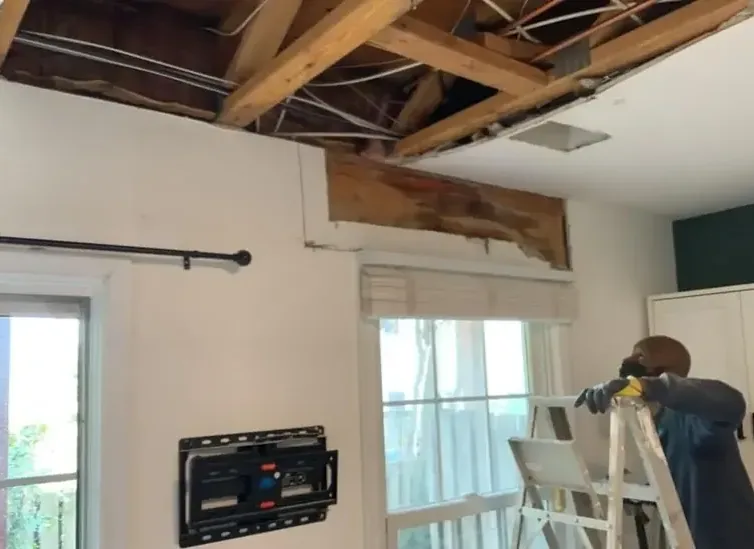
A ceiling mark can be an exit point for water that traveled along framing above it. The source might be plumbing, an appliance or roof entry, and each calls for its own repair. Mitigation begins by checking the occupied room below, then establishes which ceiling materials and connected partitions have actually become wet.
Protect existing details during access
Wendell Boulevard Historic District provides a setting where trim and ceiling finishes may deserve particular care. Properties around Carver Elementary School and Hollybrook Park also need an assessment of their own interior construction. Access can be planned around the installed materials once stability and moisture readings show where the wet assembly begins and ends.
Staining alone does not determine whether the ceiling stays in place. A sound finish with a reachable cavity presents a different drying problem from softened wallboard or wet insulation concealed overhead. The proposed opening should have a stated purpose, such as removing unstable material or reaching moisture that cannot otherwise be treated effectively.
Separate the room from overhead hazards
Bulging material and water around a light fitting require restricted access. Occupants should avoid standing beneath the affected area or puncturing a sagging ceiling. The safety assessment considers the wet electrical components and the weight of saturated finishes before contents are moved or equipment is brought into the room below.
- Record the visible stain from a dry location without reaching toward wet fixtures.
- Keep valuable belongings out of the potential fall area when safe movement is possible.
- Identify rooms or fixtures above the mark to assist the source investigation.
Dry the cavity before replacing the surface
Once access is suitable, inspection follows moisture through insulation, framing and adjoining wall tops. Structural drying addresses retained material moisture after source control. A ceiling repair should follow that work, since a fresh surface can hide damp framing and make any unfinished drying harder to reach.
Water may collect above the finish before discoloration becomes visible. The assessment uses the source history and moisture readings together, rather than treating the apparent size of the stain as the entire damage area.
Keep finish repair in the right sequence
Final notes should identify retained trim, removed sections and the condition of the exposed cavity. That record supports a repair scope suited to the existing finish. Painting and decoration belong after the water source and the drying requirements have been addressed, so the completed room rests on a sound overhead assembly.
Review flood safety precautions before entering a wet building and EPA indoor air quality information when planning cleanup.
Ceiling leak water damage in Wendell
Ceiling damage in Wendell is assessed room by room across ZIP 27591. The stain location, any sagging and the source above help establish a safe work boundary before access to overhead materials is considered.
The same service nearby: ceiling leak water damage in Smithfield, Clayton, Selma.
Related water damage services in Wendell


Ceiling Leak Water Damage questions in Wendell
Should a ceiling bubble be punctured?
Occupants should stay clear of sagging material rather than attempting to drain it. The weight of collected water, nearby electricity and ceiling stability need assessment before controlled access or removal begins.
Can a roof leak cause a distant ceiling stain?
Water can travel along framing before reaching the room below. The source investigation and moisture map follow that path so the drying scope extends to the actual wet materials above the stain.
Does every stained ceiling need replacement?
The finish condition, contamination and cavity access determine the choice. Some materials can remain for drying, while softened or unstable sections may need removal before the assembly can be treated properly.
Why inspect the top of an adjoining wall?
A ceiling cavity can discharge water into connected partitions. Checking those junctions helps identify moisture that would remain hidden if treatment stopped at the visibly marked portion of the ceiling.
Can painting begin when the mark stops growing?
The source should be repaired and the material condition verified first. A stable stain can remain after drying, but paint should not conceal wet insulation, framing or an unresolved overhead release.
What should a ceiling cleanup estimate explain?
It should name the affected assembly, purpose of any opening and expected drying work. Separate notes for electrical assessment, source repair and finish matching make the complete recovery scope easier to understand.
Resolve the cavity before the cosmetic repair
Careful access can protect useful finishes while exposing what needs treatment. A ceiling assessment connects source control, material drying and the later repair of the visible room surface.